Hello everyone.
Now that baking soda blasting with my Karcher works reliably, I've been cleaning up all sorts of things.
But I'd been holding back on the fork outer tubes. That's because I wasn't sure whether it was safe to baking soda blast anodised aluminium.
Baking soda blasting is gentle on materials, so it can be used on many things, but what about anodising?
This time I got hold of a part whose anodising I didn't mind ruining, so I tried baking soda blasting it.
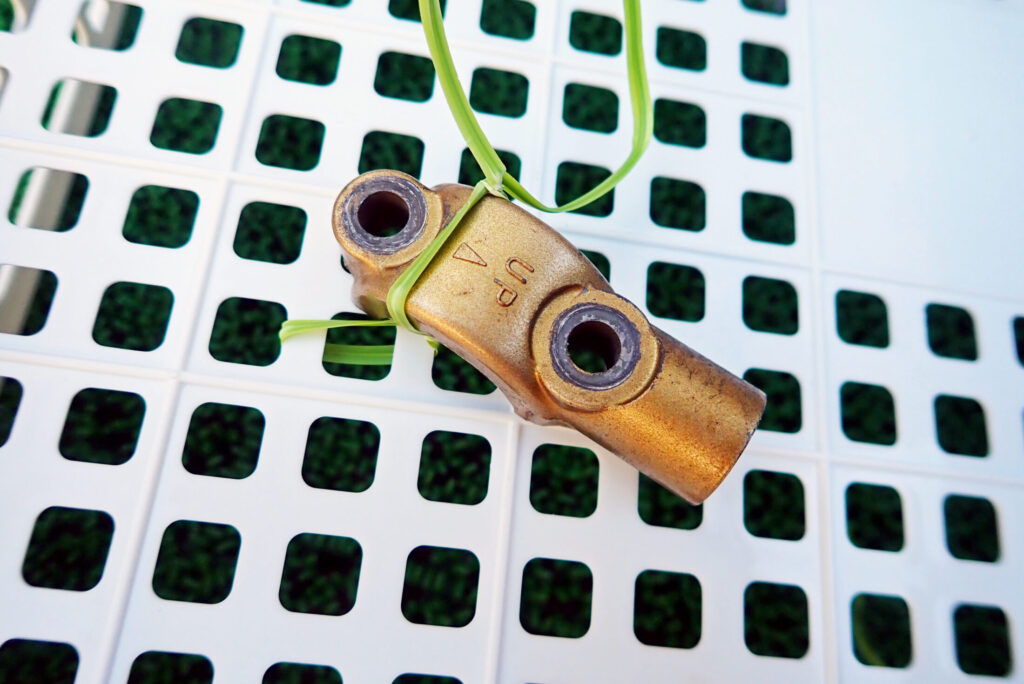
The photo above is before baking soda blasting with the Karcher.
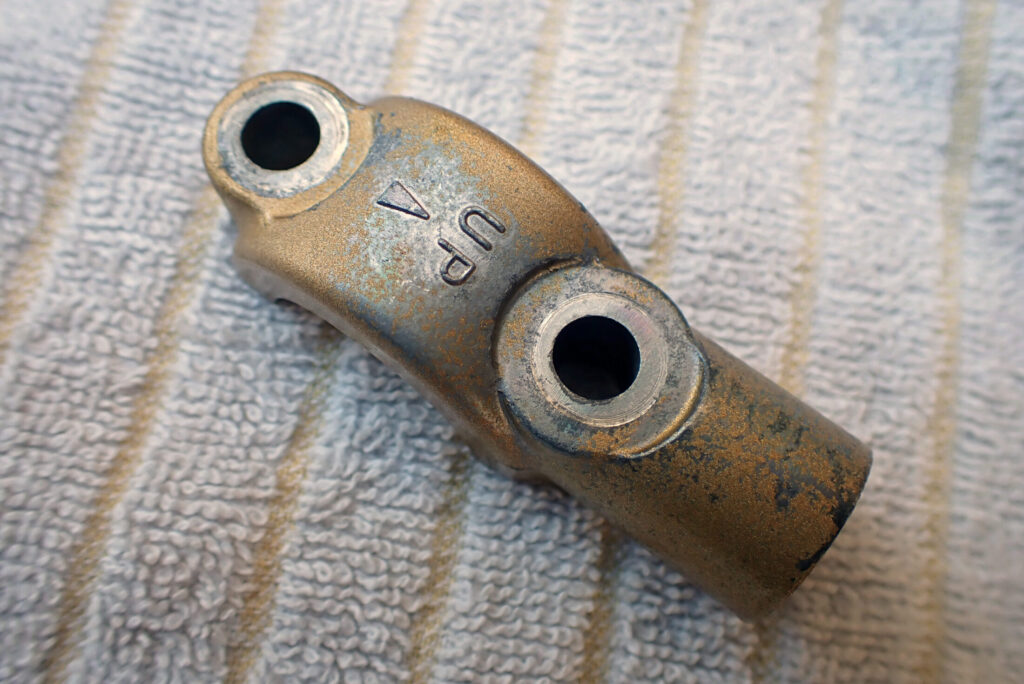
And this is after baking soda blasting.
The anodising has come off.
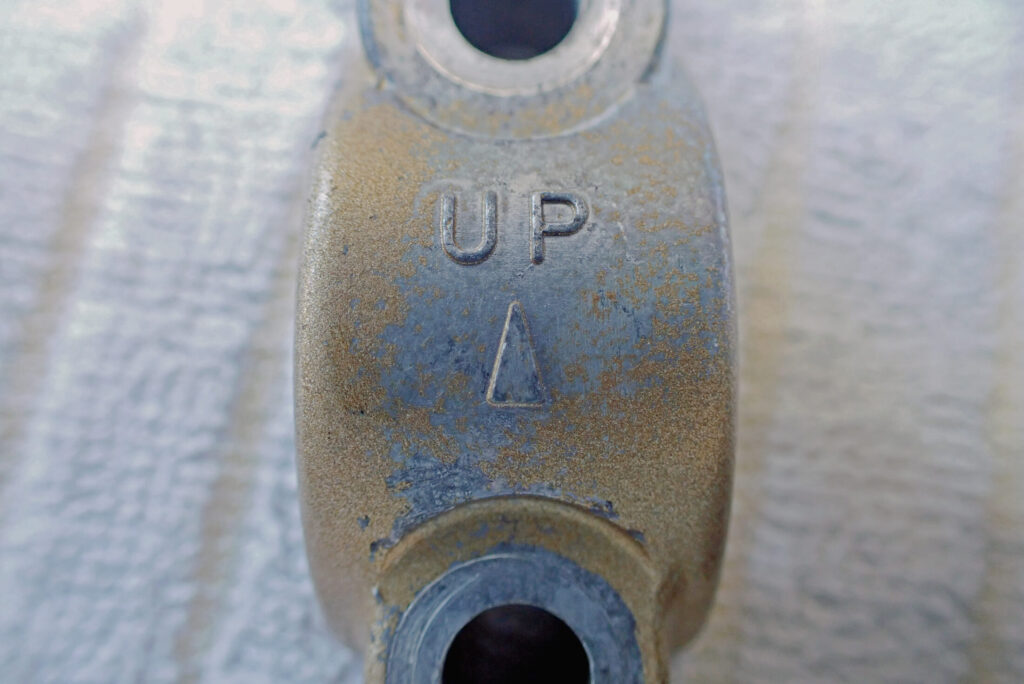
Here's a close-up.
Is this really anodising? Could it be paint?? Before blasting it looked like anodising.
So I'm not completely sure whether it was anodising or paint, but...
Conclusion: baking soda blasting with a Karcher does remove anodising.
It was the result I expected, but even baking soda blasting removes anodising, so you need to choose carefully which parts to blast.
My Karcher blasting series
These are my notes from building a DIY baking soda (wet) blaster with a Karcher pressure washer. The set-up, tools and cautions that finally worked are summarised in my DIY guide.
- First try: baking soda blasting with a Karcher
- Part 1: a funnel-shaped baking soda container
- Part 2: a splash cabinet, and baking soda that won't feed
- Part 3: feeding the soda from below
- Part 4: clogs and air leaks
- Part 5 (final): what worked
- Baking soda blasting a carburettor
- Wet blasting with glass beads (fork axle holders)
- Wet blasting a rear brake caliper
- Removing blast media thoroughly afterwards
- Does baking soda blasting strip anodising? (this post)
- A traffic cone as the media container
- DIY guide: what finally worked