Hello everyone.
My trial and error continues with baking soda blasting bike parts using a Karcher.
Today's post has no conclusion either; it's about the process.
For the trial and error so far, see these posts.
I improved the baking soda feed. The result?
I tried baking soda blasting with the set-up I made in part 3.
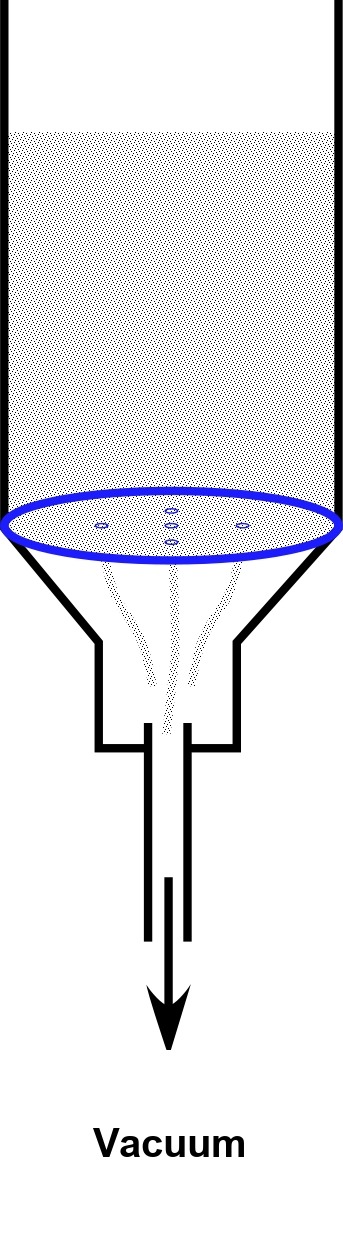
The set-up I made in part 3 is like the diagram above.
A hose that draws out the baking soda is fitted at the bottom of the PVC pipe baking soda container.
But as it is, it could draw a lot of baking soda and run out quickly.
So, as shown in blue in the diagram above, I fitted a partition, and the number and size of its holes regulate how much soda is drawn.

In real life it looks like this.
Baking soda goes in here.

Nothing else in the set-up has changed.

Let's try some baking soda blasting.
Today's subject is this rusty rod.

And this is after baking soda blasting.
It's come up clean!!
The blasting worked, but how efficient was it?
...However, blasting just this took nearly an hour.
Here's why it took so long.
- The baking soda doesn't feed
- There isn't enough vacuum
- The baking soda outlet (where it meets the water) gets wet and the baking soda clogs
Because of this, I kept having to clear clogs and tap the PVC pipe to get the soda to feed, and the time just added up.
Why it doesn't draw, cause 1 (the anti-overdraw partition backfired)

I used corrugated plastic sheet; can you see the patchy white streaks running sideways in the photo above?
The white parts are baking soda that has got in from the side of the plastic sheet.
Vacuum is being wasted here.

This is the plastic sheet seen from the side.
Baking soda seemed to be drawn in through these square channels.
Why it doesn't draw, cause 2 (water flowing back?)

This is the tip where the water and baking soda come out.
The baking soda is fed through the clear pipe; can you see that it looks clogged?

When I took the clear hose off, damp baking soda was clogging it.
No baking soda is going to feed through that.
Weak vacuum: air leaking in
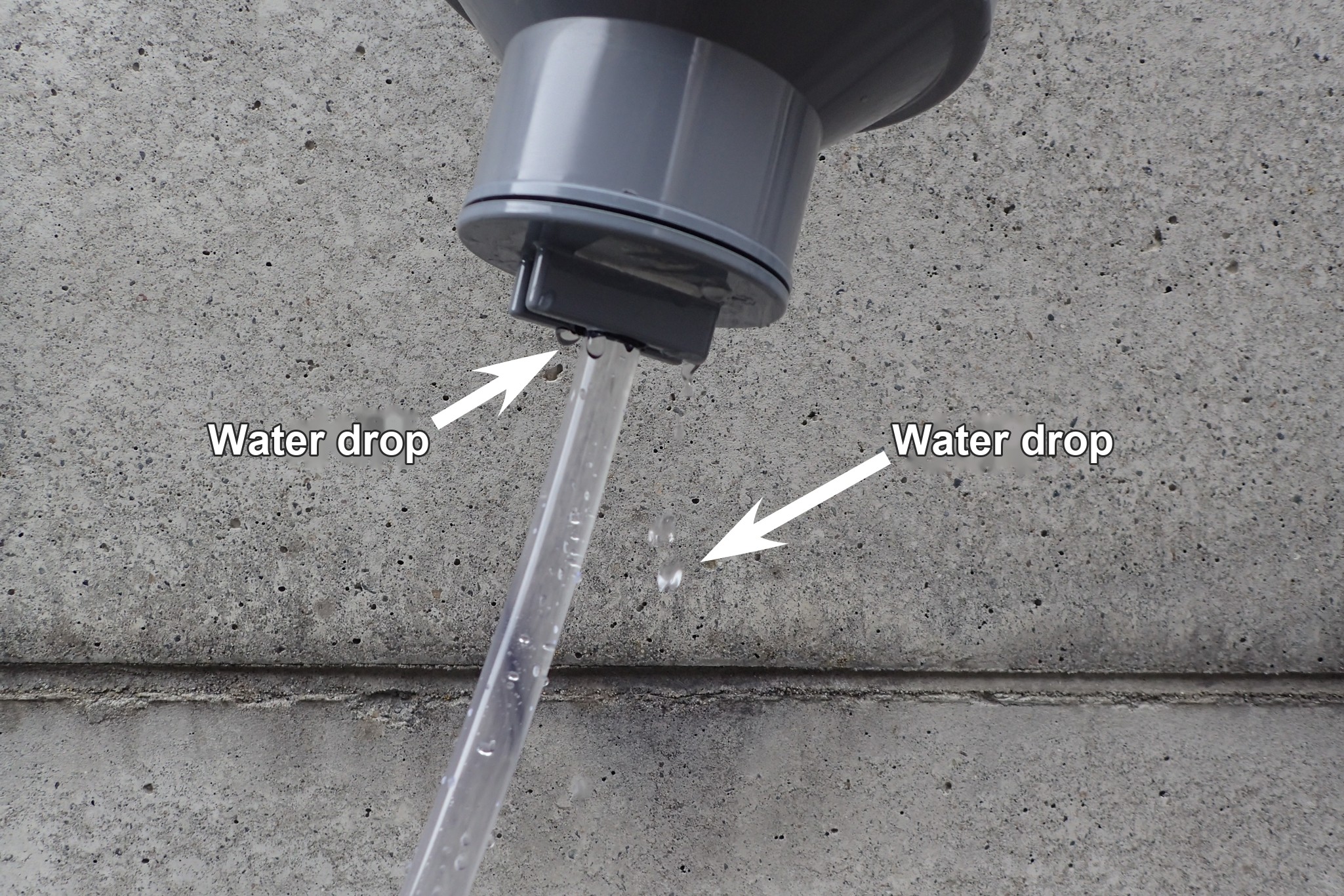
When I filled the PVC pipe that holds the baking soda with water to clean it, water leaked out between the clear hose and the PVC pipe.
Can you see the water drops falling near the middle of the photo?
If there's a gap big enough for water to get out, air gets sucked in there when vacuum is applied, so I suspect there wasn't enough vacuum to draw out the baking soda.
Next I'll work on solutions to these problems.
My Karcher blasting series
These are my notes from building a DIY baking soda (wet) blaster with a Karcher pressure washer. The set-up, tools and cautions that finally worked are summarised in my DIY guide.
- First try: baking soda blasting with a Karcher
- Part 1: a funnel-shaped baking soda container
- Part 2: a splash cabinet, and baking soda that won't feed
- Part 3: feeding the soda from below
- Part 4: clogs and air leaks (this post)
- Part 5 (final): what worked
- Baking soda blasting a carburettor
- Wet blasting with glass beads (fork axle holders)
- Wet blasting a rear brake caliper
- Removing blast media thoroughly afterwards
- Does baking soda blasting strip anodising?
- A traffic cone as the media container
- DIY guide: what finally worked