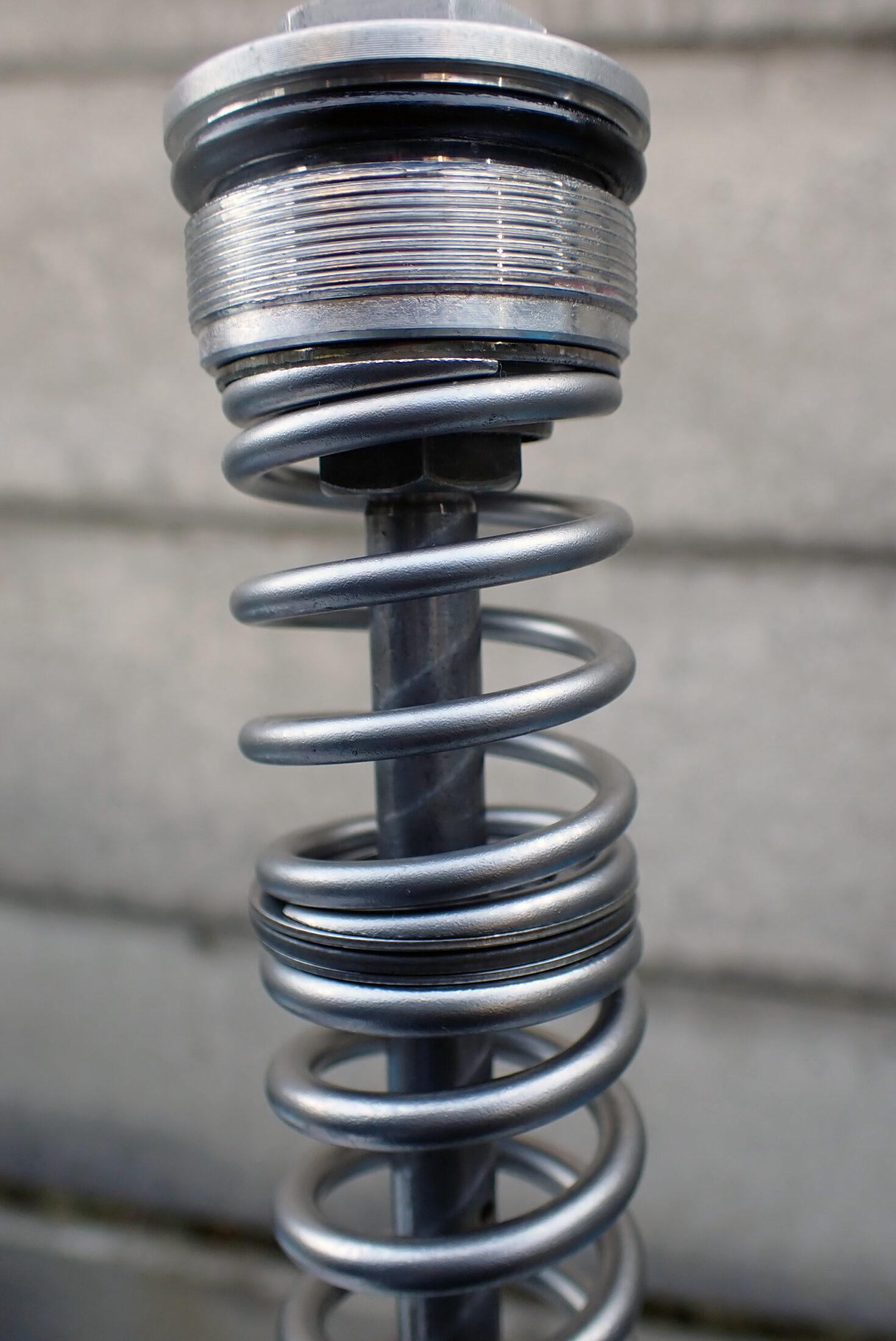
Hello everyone.
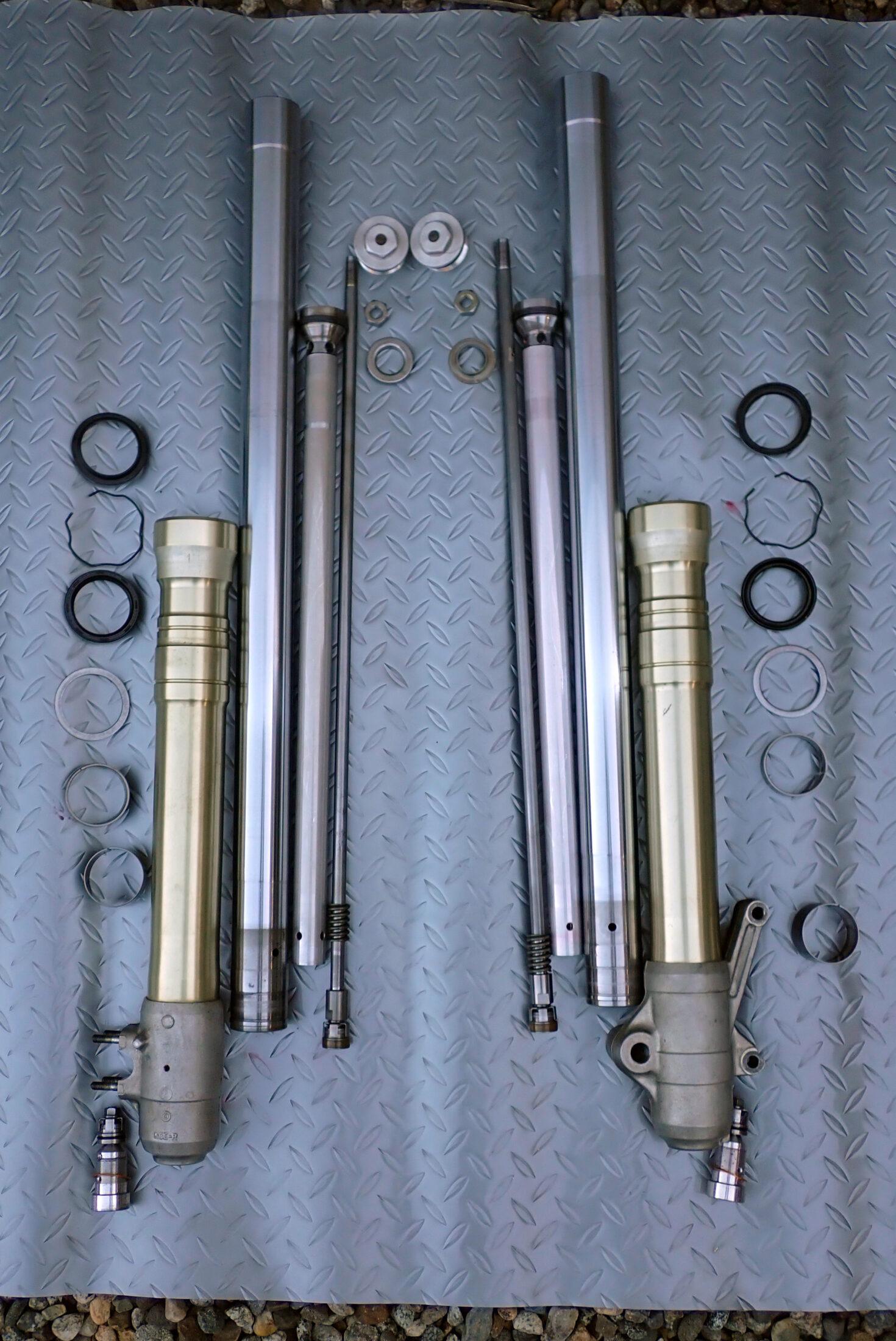
I'm currently overhauling the front forks on my Honda XR250 BAJA (the Japan-market XR250 / MD30).
-
-
Honda XR250 BAJA Front Fork Disassembly: Tools You Need and How to Remove the Centre Bolt
How I stripped the front forks on my Honda XR250 BAJA (MD30) step by step: the tools you need, removing the top cap, using a 27 mm damper holder to undo the centre bolt, and separating the inner and outer tubes.
That meant I needed to adjust the fork oil viscosity for the BAJA.
The aim is to bring an aftermarket fork oil close to the viscosity of the genuine Honda oil.
The specified fork oil for the XR BAJA is HONDA ULTRA CO (Cushion Oil), with a kinematic viscosity of 16.2 at 40°C.
This time I decided to treat myself to A.S.H. FORK OIL #20, which is 17 at 40°C.
But wherever I looked, #20 was sold out or out of stock. Maybe it's no longer made, or the raw materials aren't available...
I had some A.S.H. FORK OIL #30 at hand, but at 28 at 40°C it felt too thick to use as it is. (I haven't actually tried it, so I don't know how much stiffer it would be.)
Searching online for A.S.H. fork oil, I found that A.S.H. FORK OIL #11 was on sale. Its viscosity at 40°C is 11.6.
So I thought: if I mix #11 and #30, can't I make the 16.2 of HONDA ULTRA CO?
Here's the table I worked out in Excel.
| Nominal viscosity at 40°C | Ratio | Ratio | Ratio | Ratio | |
| A.S.H. FORK OIL #11 | 11.6 | 5 | 7 | 7.2 | 8 |
| A.S.H. FORK OIL #30 | 28 | 5 | 3 | 2.8 | 2 |
| Blend viscosity (simple weighted average) | 19.8 | 16.52 | 16.19 | 14.88 | |
| Blend viscosity (Refutas equation) | approx. 17.5 | approx. 14.8 | approx. 14.5 | approx. 13.6 |
Mixing A.S.H. FORK OIL #11 : A.S.H. FORK OIL #30 = 7.2 : 2.8
gives almost the same viscosity as Honda's specified oil (16.19) by a simple weighted average.
However, when I checked again later, I learned that oil viscosities don't blend in simple proportion; the blend leans towards the thinner oil. Blend viscosity is calculated with methods such as the Refutas equation in ASTM D7152. The bottom row of the table is recalculated with that equation. At 7.2:2.8 it comes out at about 14.5, roughly 10% thinner than the specified 16.2 (fork oils contain additives, so treat this as a guide).
To hit 16.2 using the Refutas equation, mix #11 and #30 at roughly 6:4 (about 41% #30).
The standard oil volume is 461 cc per leg. I followed the simple weighted average and put in 332 cc of #11 and 129 cc of #30. To hit 16.2 by the Refutas equation, it would be about 272 cc of #11 and 189 cc of #30.
So I bought the #11 and assembled the forks. Riding on forks filled with this oil, I've never felt that they were too soft.
I've also written a guide to overhauling the XR250 / BAJA front forks, from disassembly to oil, springs and re-plating, with the steps and costs.
-

-
Honda XR250 / BAJA Front Fork Overhaul Guide: Steps, Costs and Model-Year Differences
A summary of my XR250 BAJA (MD30) front fork overhaul: the order of the work, re-plating costs, spring differences between the XR250, BAJA and XR250R, mixing fork oil to match Honda's viscosity, and axle thread sizes by year.