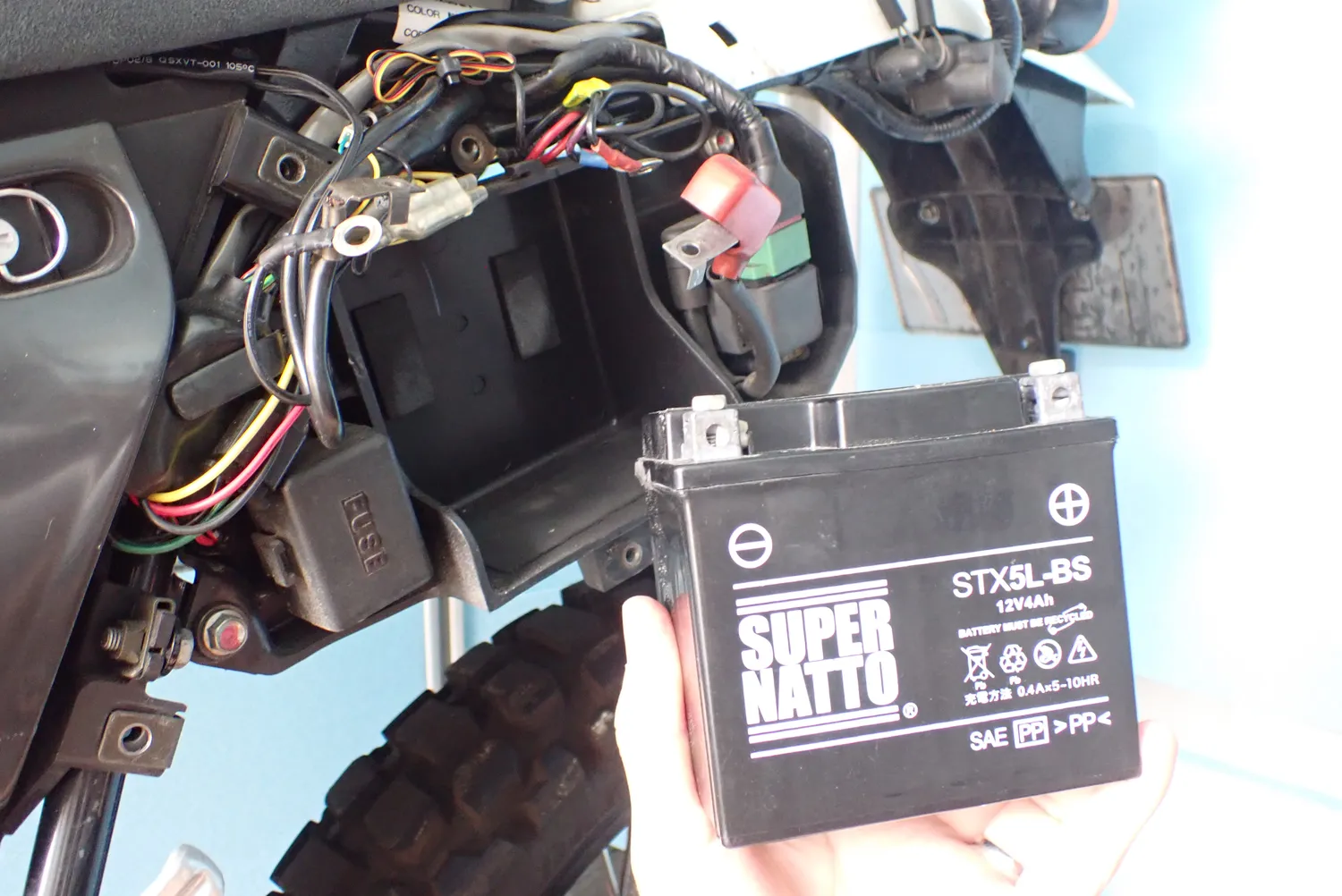
You've got everything ready for a ride. You press the starter, full of anticipation...
"Whirr... whir... click."
On a winter morning, a feeble whine and then silence. However many times it happens, an engine that won't start is never nice. "It was fine last week!" "Do I need a new battery?" It's easy to panic.
Batteries lose performance in the cold, so winter is when flat batteries happen most. But you don't always need to buy a new one straight away. If you know what to do, you can often get the engine going on the spot.
In this article, as someone who maintains my own bikes, I cover:
- Emergency ways to get the engine started now
- Three habits to keep the battery from going flat
- How to use a maintenance charger and a multimeter
I hope it helps you keep your bike ready to ride, even in winter.
The short version
- First, check the kill switch, the gear and the side stand
- When you're out, start the engine with a jump starter or jump leads
- If you don't ride much in winter, connect a maintenance charger or disconnect the negative terminal
- I've used a CTEK charger for more than 15 years
First, check: is it really a flat battery?
Before you rush to call breakdown recovery, take a calm look at the situation. It could be a simple operating mistake or a different fault, not the battery.
Typical signs of a flat battery (starter sound, brightness of the lights)
If the warning lights are dimmer than usual when you turn the key on, or the horn sounds weak, suspect the battery. If pressing the starter button only gives a clicking relay sound, or the starter turns very slowly and the engine won't fire, that's a classic sign of too little power. If the battery is completely flat, there may be no response at all when you turn the key.
A simple slip? Check the kill switch and the gear
If the starter doesn't turn at all, check that the red kill switch on the right handlebar isn't set to OFF. It's easy to knock it off without noticing.
If the bike is in gear with the side stand down, the safety interlock stops the engine from starting. The basic troubleshooting step is to put it back in neutral, pull the clutch in firmly and press the starter again.
I once panicked after a fall when I tried to restart the engine while still in gear and the starter wouldn't turn.
Emergency: how to start the engine with a flat battery
If it happens when you're out or in a hurry in the morning, there's no time to charge it slowly. Here's how to start the engine by supplying power from outside.
Use a jump starter (power bank type)
The easiest option is a power-bank-style jump starter. Connect the clamps to the battery's positive and negative terminals, switch it on and press the starter. Follow the product's instructions. Many can also charge a phone, so keeping one under the seat on tours gives you peace of mind. The good thing is that you can sort it out by yourself without waiting for breakdown recovery.
Get a jump from a car or another bike with jump leads
If there's another vehicle (a car or a friend's bike), connect the batteries with jump leads to share power. Connect them in this order:
- Positive on the bike with the flat battery
- Positive on the helping vehicle
- Negative on the helping vehicle
- Negative on the bike with the flat battery, or a bare metal part of its engine (earth)
A short circuit can blow fuses or even damage the ECU, so work carefully. The precautions differ depending on whether the helping vehicle is a bike or a car.When getting a jump from a car, connect the leads with the car's engine off.For the detailed steps and precautions, follow the owner's manuals for both the car and the bike.
Bump starting is the last resort (take care with scooters and fuel-injected bikes)
If the battery is only weak, bump starting, using a slope or a push to get the bike rolling, can sometimes work. Turn the key on, select second or third gear, pull the clutch in and push the bike. Once it's rolling, let the clutch out sharply while opening the throttle slightly. However, it's easy to drop the bike and it takes a lot of effort, so I don't recommend it. Also, if the battery is completely flat, or on a fuel-injected (FI) bike, it may not start even by bump starting.
Prevention: three habits to stop the battery going flat in winter
It's said that letting a battery go flat reduces its performance and shortens its life. Here's how to keep it in good condition through winter, so the bike is always ready to ride.
Ride regularly (why just starting the engine isn't enough)
The battery charges while you ride, so riding the bike regularly is the most basic maintenance. But it's said that idling generates little power and does little to charge the battery. If you start the engine, riding properly for a while is a better way to put back the charge you've used.
Leave a motorcycle maintenance charger (trickle charger) connected
In winter, when you can't ride much, a maintenance charger (trickle charger) plugged into a household socket is handy. It's a charger that monitors the battery and tops up what it loses with a small current. With dedicated products such as those from Daytona (a Japanese brand) or OptiMate, you leave the supplied lead attached to the bike, and after a ride you just plug the connector in.
Note: some chargers can't be used with lithium batteries, so check compatibility.
I've used a CTEK charger for more than 15 years without any faults, so I recommend it.

Disconnect the negative terminal if you won't ride for a long time
If you don't plan to ride for a while, disconnecting the battery's negative terminal prevents it from draining. Even with the key off, a bike keeps drawing a little current (parasitic drain) for things like the clock and immobiliser, so leaving it connected for a long time makes it more likely to go flat. Always disconnect the negative side first, and insulate the disconnected lead with tape so it can't touch the terminal. If you can, take the battery off the bike and keep it indoors.
If it won't recover: judging battery life and when to replace it
If it goes flat again soon after charging, or the starter won't turn, the battery may be at the end of its life. Measuring the voltage with a multimeter gives you a clue.
How to check with a multimeter (voltmeter)
Measure the voltage across the battery terminals with a multimeter. The normal voltage depends on the battery type, so check the battery maker's instructions or data. If the voltage doesn't rise after charging, or drops sharply the moment you start the engine, suspect the battery is worn out. Even a cheap multimeter can measure voltage, so having one helps you pin down problems.
I use a HIOKI Card HiTester 3244-60. It's a little pricey, but it packs away small, sets the range automatically, and measures up to 500 V, so I can use it on household appliances too.


Consider replacing an old battery early
Battery life depends on the type and how it's used. Check the battery maker's data for a guide. A battery that's been in use for years can suddenly fail. If it starts going flat again and again in winter, replacing it rather than struggling on will save you from getting stuck when you're out.
Summary: get ready, and a winter flat battery won't catch you out
A flat battery in winter can happen to anyone, but if you're prepared, you won't panic.
Carry a jump starter just in case, keep the battery in good shape with a maintenance charger, and when it reaches the end of its life, don't struggle on; replace it with a new battery. Do these three things and you can deal with it calmly, even on a cold morning.
Considering what it's like to be stranded when you're out, I think a maintenance charger and a multimeter are well worth having.
I explain how to remove and charge the battery, how to prepare for winter, and how to choose a battery in these articles.
-

-
How to Remove and Charge a Motorcycle Battery: Negative Terminal First (BMW G650GS Example)
Why you disconnect the negative terminal first, the tools you need, and step-by-step photos of removing and charging the battery on a BMW G650GS.
-

-
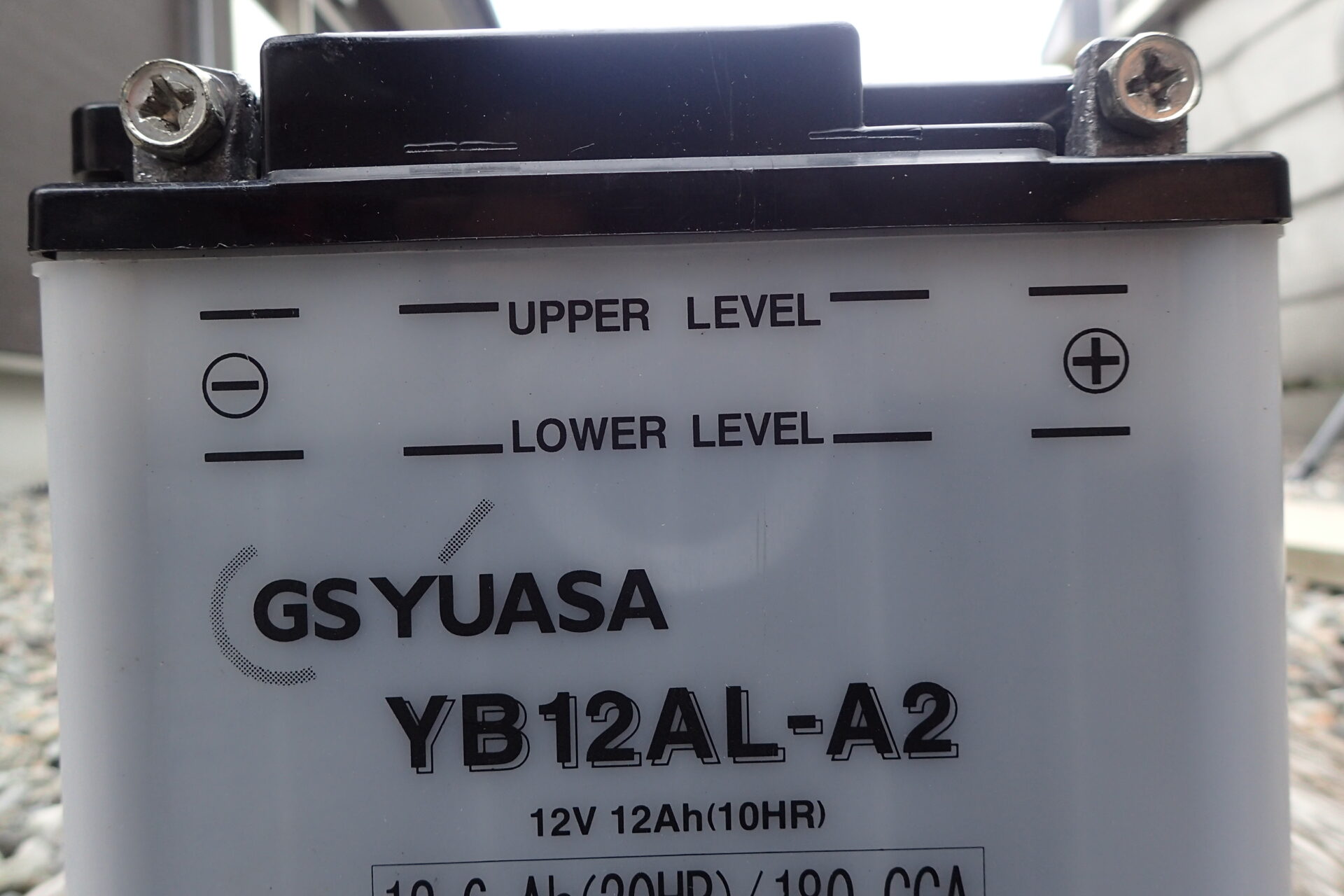
Honda XR250 BAJA Winter Prep: Removing the Battery (Tools and Steps)
Taking the battery out of my Honda XR250 BAJA for winter: the tools you need, the three side cover bolts (watch the collars on the top one), the two battery bolts, then negative terminal first and positive second.

-
-
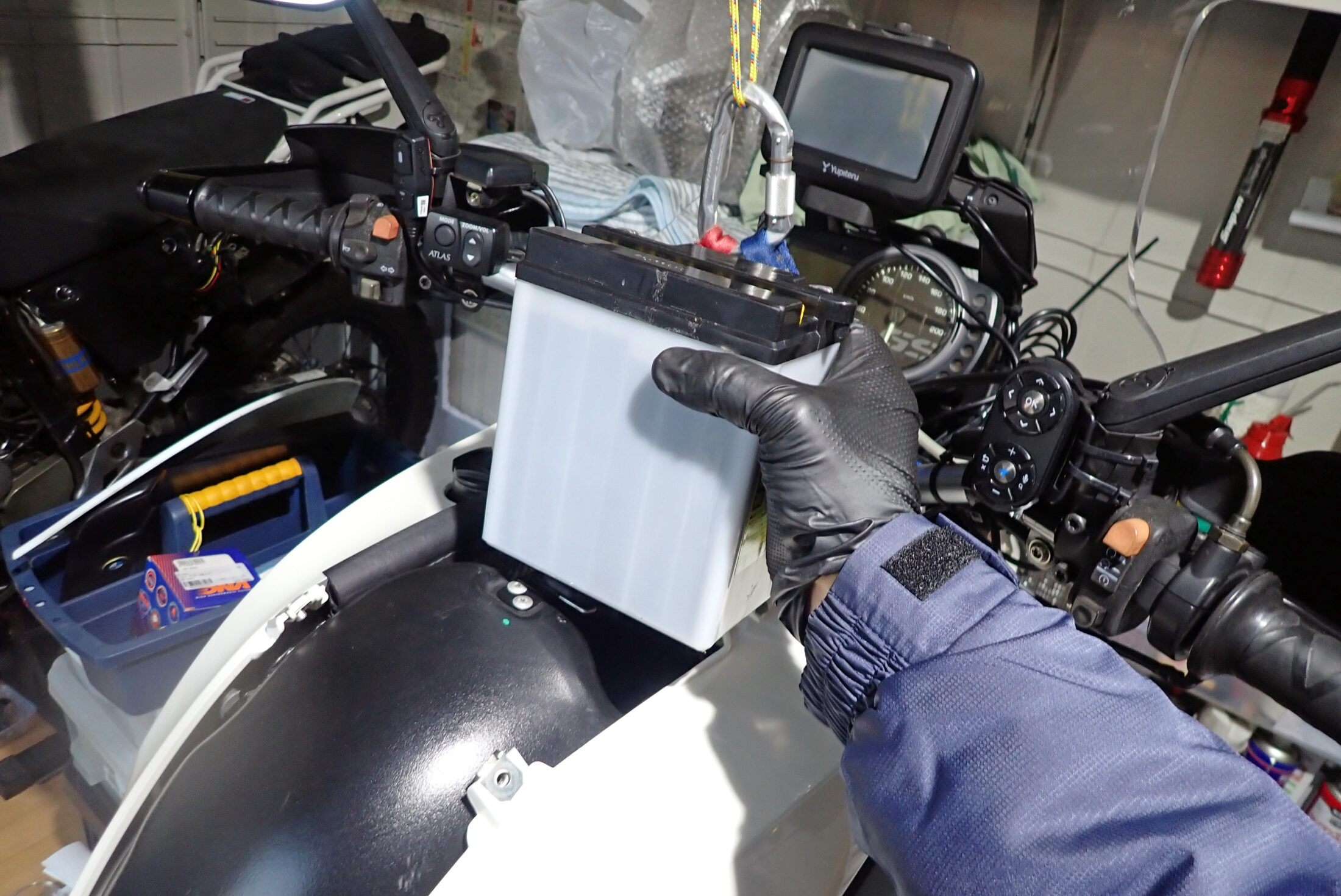
How to Remove the Battery from a BMW G650GS: Centre Cowl, Terminals and the Breather Hose
On a BMW G650GS the battery sits under the centre cowl. Remove 10 Torx screws and the oil filler cap, disconnect the negative first, and don't forget the breather hose on the vented battery. It took me about 10 minutes.
I explain how I took apart and serviced the starter motor in this article.
-
-
Honda XR250 BAJA Starter Motor Strip-Down: Tools, Terminal Nuts, Washers and Brushes
Stripping a used spare starter motor for my Honda XR250 BAJA: the tools you need, the two 10 mm terminal nuts, washers you can't buy separately, the BC1693G oil seal, and checking the brushes against the 8.5 mm limit.

I explain charging and removing a flat battery, and a trick to make the terminal bolts easier to tighten, in this article.
-

-
Honda XR250 BAJA Flat Battery: Removal, CTEK Charging and a Rubber-Strip Trick for Terminal Nuts
How I took the flat battery out of my Honda XR250 BAJA (MD30), charged it with a CTEK JS800, and used a 1 mm rubber strip so the terminal nuts no longer drop out of reach. Plus why a seven-year-old battery only works because of the kick-start.