Are you bothered by too much engine braking, or jerky vibration at low speed and low revs?
In short, fitting a crankcase pressure reducing valve (T-REV) softens the sudden engine braking that throws you forward, and makes touring less tiring.
I fitted a T-REV (9 mm, 0.07 mm) to the BMW G650GS (650 cc single) I used to own. Here I review the five changes I felt on the road, show a speed and gear graph I made, and list the points to know before you buy. Nothing here was measured; these are all my own impressions.
| Item | Details | Notes |
|---|---|---|
| Bike | BMW G650GS | 650 cc single-cylinder engine |
| Part fitted | TERAMOTO T-REV | For a 9 mm breather hose / 0.07 mm shim |
| Price | 26,000 yen (excluding tax) | Price for the F650 series, the G650GS's sister model (maker's website, October 2026). Expensive, but I felt it made a big difference to fatigue |
| Overall | ★★★★★ (very happy) | Softer engine braking, smoother vibration, less jerkiness |
[Summary]
- Fitting the T-REV softened the harsh engine braking, so I was no longer thrown forward
- Less jerkiness at low speed, so I used the clutch slip (half-clutch) less often in town
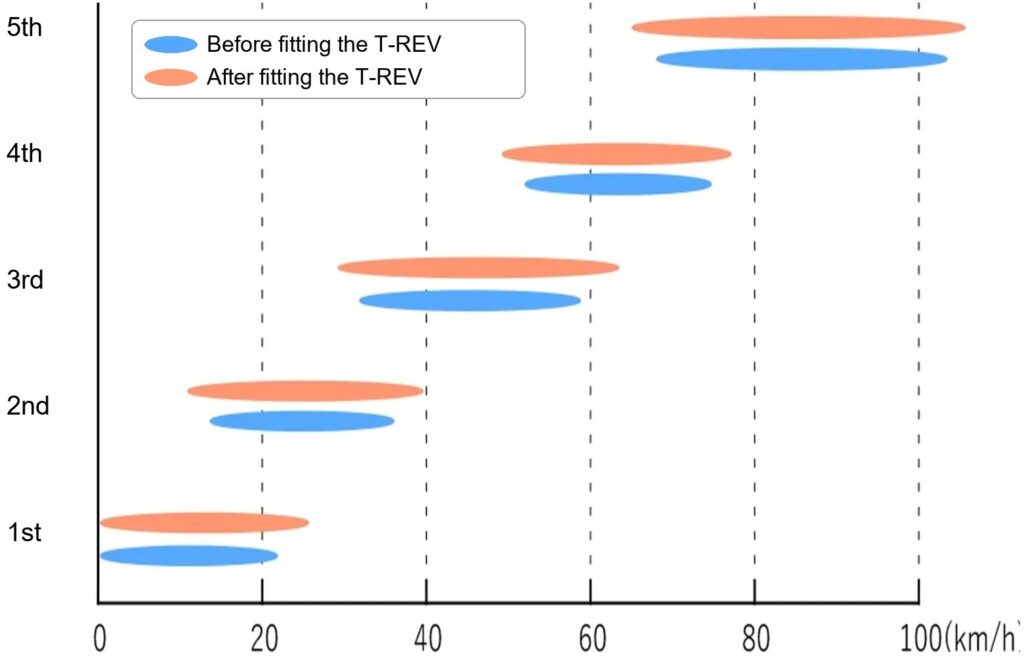
- The usable speed range in 1st gear grew from about 20 km/h to 25 km/h, so I could be a little lazier with gear changes
- The shock at top and bottom dead centre was softened, and the vibration felt milder, like a "1.5-cylinder" engine rather than a single
- Water in the blow-by gas emulsifies the oil, and this sticks to the valve, so regular checks and cleaning are needed
Verdict: does a reducing valve (T-REV) work? My overall view after riding the G650GS
The T-REV is an expensive part, but it is well worth it. It made long tours less tiring for me.
A 650 cc single has a large displacement per cylinder compared with multi-cylinder bikes, so engine braking when you close the throttle, and vibration, are fairly strong.
With the T-REV fitted, the rough edges were smoothed off, and the bike became easier to ride both in town and on twisty roads.
Why does it work? How crankcase pressure reduction works, and why it suits singles
As the piston goes down, it compresses the air in the crankcase. This pumping loss (air resistance) is let out through a one-way valve, so the engine runs more freely.
In a four-stroke engine, the air in the crankcase is compressed and expanded every time the piston goes up and down. This causes a large pumping loss and strong engine braking.
The T-REV's precise reed valve (0.07 mm shim) lets blow-by gas flow in one direction only (out of the crankcase), which keeps a moderate vacuum (reduced pressure) in the crankcase.
In a single, the change in crankcase volume caused by the piston is concentrated in one cylinder, so I think you notice the effect more easily (my guess).
Riding impressions: five changes I felt on the G650GS
After fitting the T-REV, I felt clear changes on the road: a wider range for each gear, less jerkiness at low speed, and vibration like a "1.5-cylinder" engine.
| Item | Before (standard) | After (T-REV fitted) |
|---|---|---|
| 1. Range of each gear | 1st gear ran out at about 20 km/h, so I had to shift straight away | 1st gear pulls to about 25 km/h, fewer gear changes |
| 2. Jerkiness at low speed | Jerky at low speed, lots of half-clutch | Less jerky, steadier at low speed |
| 3. Feel of the vibration | The shock of the piston pounding up and down | Shock at top and bottom dead centre softened; smoother |
| 4. Number of cylinders it feels like | The rough vibration typical of a single | A milder feel, almost like a "1.5-cylinder" |
| 5. Engine braking | Sudden engine braking that throws you forward | Gentle, easy-to-manage engine braking |
The change in the range of each gear was especially clear: I could hold 1st gear to a higher speed after pulling away. As the graph I made below shows, the usable range of each gear grew from the blue bars to the orange bars.
This meant I no longer had to keep changing gear nervously when turning at junctions or riding in town. I could be a little lazier with the gears, and riding became much easier.
Also, the shock when the piston suddenly reverses at top and bottom dead centre was softened. I have ridden singles, twins and triples, and to me the single felt as if it had become a "1.5-cylinder", with the edges taken off the vibration. It is only an impression, but it felt as if the piston slowed down a little near top and bottom dead centre, which reduced the shock of suddenly changing direction.
Engine braking became gentler too. Before, engine braking in a low gear was strong enough to tip me forward, so I avoided high revs in low gears.
Downsides and maintenance to know before you buy
Besides the high price, the biggest downside of a reducing valve is that oil emulsified by the water in the blow-by gas sticks to the valve and stops it working properly.
Riding in winter, or making lots of short trips, is said to make condensation in the engine mix with oil mist and form a white, mayonnaise-like emulsified sludge.
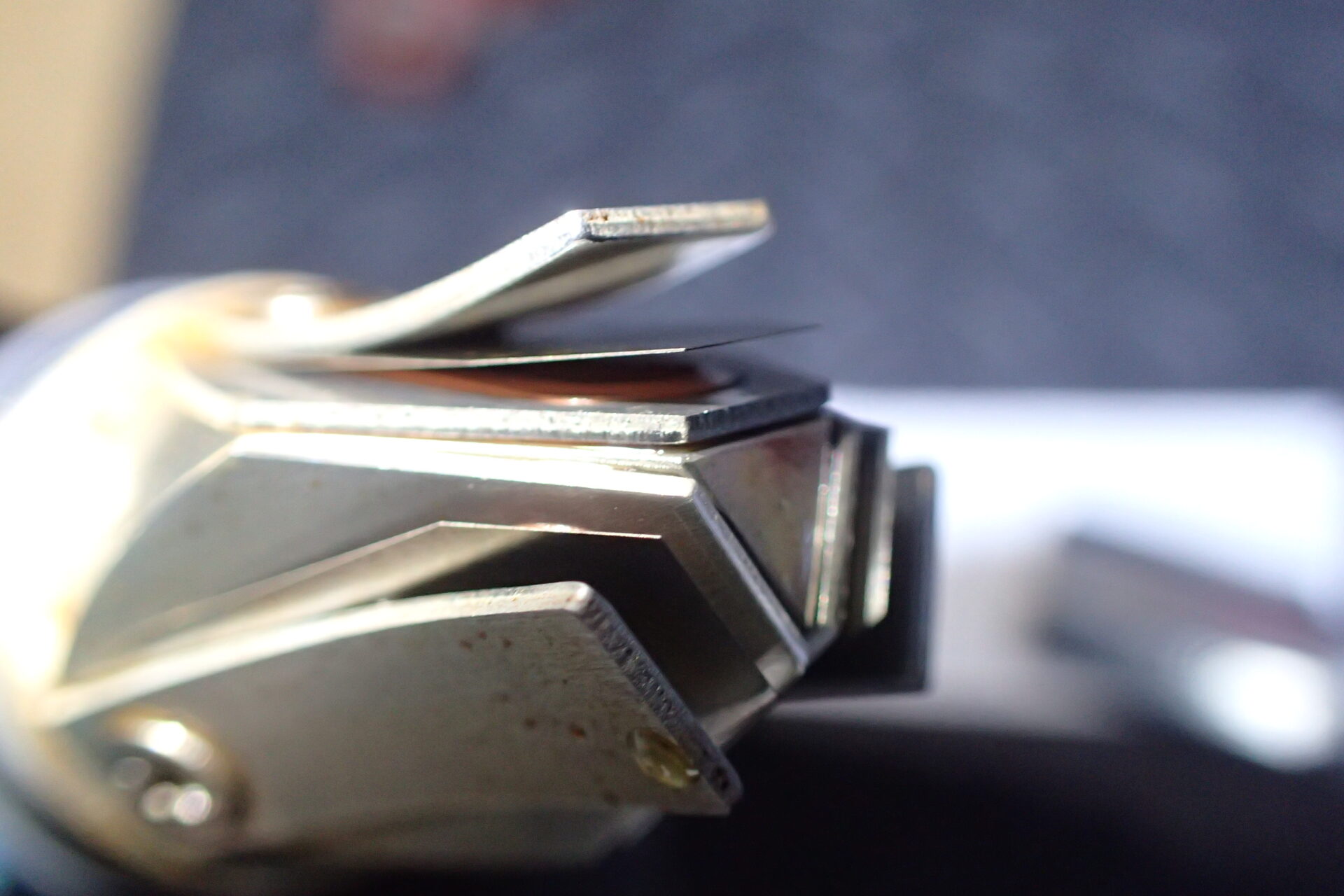
When this sludge sticks to the reed valve (shim) inside the T-REV, the reed no longer closes properly (when I took mine apart, the reeds were lifting), and performance drops. If crankcase pressure cannot escape properly, it may also cause oil leaks.
The maker (TERAMOTO) recommends checking and cleaning every year or 10,000 km, and a full overhaul every 2 years or 20,000 km. My T-REV had emulsion in it only about six months after an overhaul, so it seems wise to check it sooner if you ride in winter or make lots of short trips.
I used this T-REV for about three years. When I had gone a long time without maintaining it, the effect faded. After a full overhaul, the vibration and engine braking went back to how they felt when I first fitted it.
-

-
T-REV Maintenance Part 1: Taking Apart a Crankcase Pressure Reducing Valve (BMW G650GS)
Removing and taking apart the TERAMOTO T-REV on my BMW G650GS: emulsion inside, lifting reeds, distorted gaskets, and a dent from not using the special tool.
Who should (and shouldn't) fit a reducing valve (T-REV)
I recommend a reducing valve if you are tired of the strong engine braking of a big single. I don't think it suits you if you don't like doing maintenance.
| Type of rider / bike | Recommendation | Reason |
|---|---|---|
| Big singles | ◎ Recommended | Large pumping loss, so you easily feel the softer engine braking and lower vibration |
| Riders who want less fatigue on long tours | ◎ Recommended | Fewer gear changes and less sudden deceleration, so you get less tired |
| DIY riders who don't mind regular stripping and cleaning | ◎ Recommended | With regular maintenance, the effect lasts |
| Four-cylinder bikes and small bikes (125 cc or less) | △ Not tested | I have not tried it. The effect may be harder to feel (my guess) |
| Riders who want something completely maintenance-free | × Not recommended | If you skip cleaning, sludge can build up and cause trouble |
Frequently asked questions about reducing valves
Q1. Is it still legal / will it pass inspection with a reducing valve fitted?
Keep the blow-by hose going back into the airbox as standard, so that no blow-by gas is released into the air. I used mine with this routing. Rules differ between countries, so check your local regulations.
Q2. What happens if you fit it the wrong way round?
If you fit it backwards, crankcase pressure cannot escape, which may cause oil leaks and other problems. Make sure the arrow stamped on the body (One Way) points in the direction of air flow (from the crankcase to the airbox).
Summary: the T-REV, alongside a proper installation and fuelling tweaks
For me, TERAMOTO's T-REV was worth its 26,000 yen (excluding tax) in reduced fatigue, and I can recommend it to anyone riding a single.
Before I sold the G650GS, I removed the T-REV to return the bike to standard. Without it, the engine's pulses felt rougher and it was jerkier at low speed again.
I explain the hose routing and the fitting procedure in detail in the article below.
-

-
Fitting a T-REV Crankcase Pressure Reducing Valve to a BMW G650GS (Without Cutting the Original Hose)
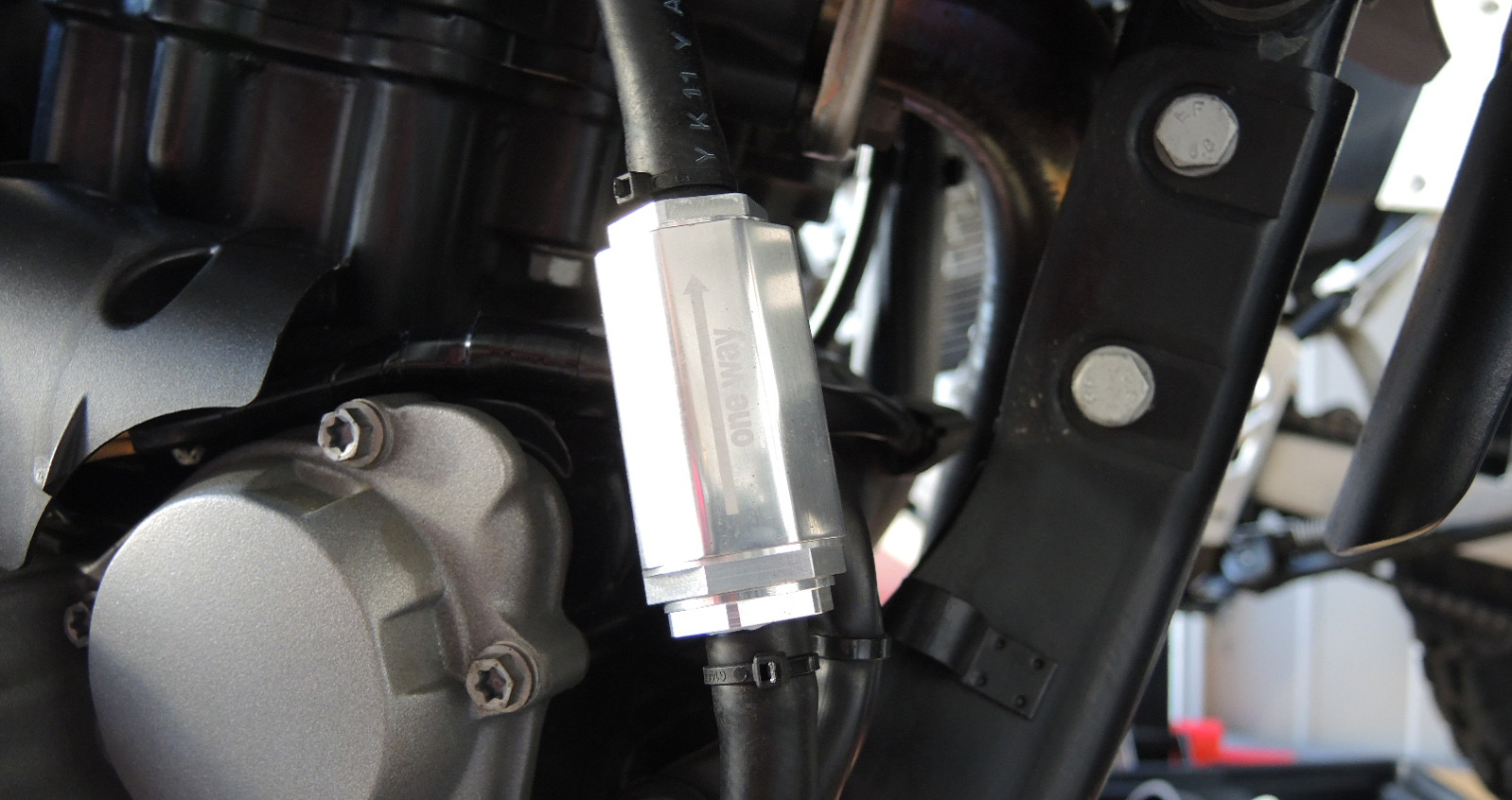
How I fitted a TERAMOTO T-REV (9 mm, 0.07 mm shim) to my BMW G650GS using a separate breather hose, so the original hose stays uncut.
On my G650GS I also used a BoosterPlug, which corrects the fuelling. See my BoosterPlug review below.
-
-
BMW G650GS BoosterPlug Review: 20 km First Ride and Over a Year Later
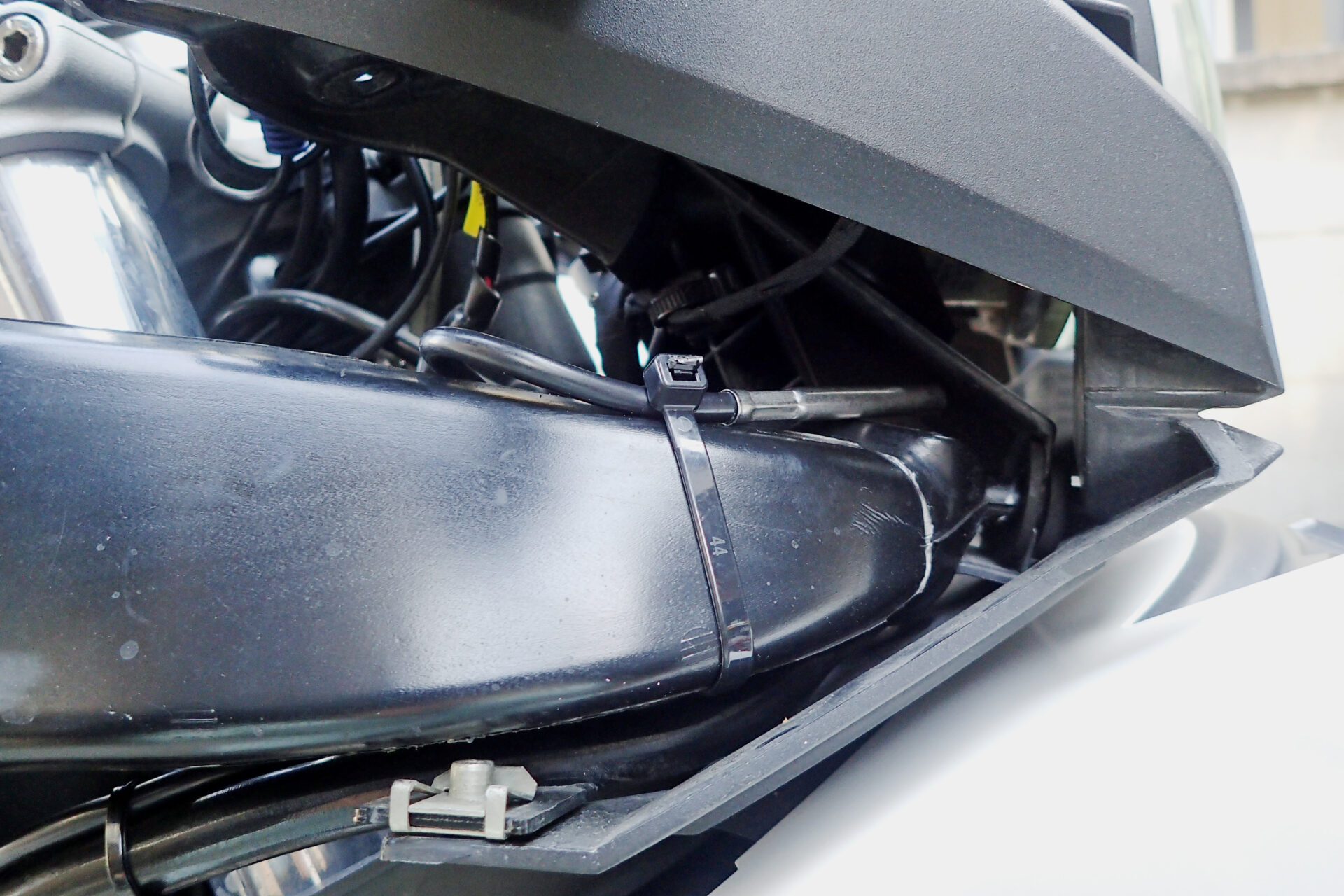
Does your BMW G650GS feel jerky and hard to ride when pulling away or at very low speeds? Are you worried about knocking or stalling? In short, after just 20 km with a BoosterPlug fitted, the bike was noticeably easier to ride when pulling away and at very low speeds. More than a year later, the effect is still there (added October 2026). Here is my honest review from my own G650GS: changes in low-speed torque and usable rev range, exhaust note and vibration, and the downside of fuel economy. ItemDetailsNotesBikeBMW G650GSSingle-cylinder 650 cc enginePart testedBoosterPlugPlug-in intake air temperature correction ...
My T-REV series on the BMW G650GS:
- Review: how the T-REV changed my G650GS (this post)
- Fitting the T-REV
- Maintenance part 1: taking it apart
- Maintenance part 2: full overhaul
- Removing the T-REV and riding without it