"Stepping into the garage during summer feels like entering a sauna..."
"I'm worried about the extreme summer heat accelerating the deterioration of my precious bike..."
For motorcycle riders, dealing with scorching summer temperatures inside the garage is a critical challenge. Standard metal garages and shuttered storage sheds quickly trap solar radiation, easily exceeding 40°C (104°F) indoors. This extreme heat rapidly accelerates the degradation of your bike's battery, tires, rubber seals, and plastics.
To protect my motorcycle, I tackled a DIY insulation project inside my garage using Styrofoam (extruded polystyrene insulation boards).
Note: For the step-by-step DIY installation guide, tools, and materials used, check out my previous detailed post:
In this follow-up article, I am sharing the real-world performance results: "How much did the internal garage temperature actually change after installing Styrofoam insulation?" Let's analyze the exact graph data recorded by a digital thermo-hygrometer!
Why Is Extreme Summer Heat in the Garage Dangerous for Your Motorcycle?
Before looking at the test results, let's review the specific damage that high garage temperatures inflict on your bike.
- Rapid Hardening and Cracking of Rubber Parts & TiresProlonged exposure to extreme heat causes the oils in tire compounds to leach out, leading to premature hardening and sidewall cracking. It also degrades fork seals, O-rings, and engine gaskets.
- Increased Battery Self-Discharge & Reduced Service LifeBoth lead-acid and lithium-ion batteries are vulnerable to heat. High ambient temperatures drastically increase their self-discharge rate and shorten overall battery lifespan.
- Degradation and Warping of Plastics & FairingsTrapping heat above 40°C (104°F) for extended periods can cause plastic fairings to warp and clear-coat paint finishes to discolor or fade.
- Fuel Evaporation and Internal Tank Pressure Build-upGasoline in the fuel tank evaporates much faster under heat, increasing internal pressure and filling the tank space with volatile vapors.
The most effective way to avoid all these mechanical risks is thermal insulation that suppresses indoor temperature spikes.
[Test Results] Analyzing the Garage Temperature Graph After Installing Styrofoam Insulation!
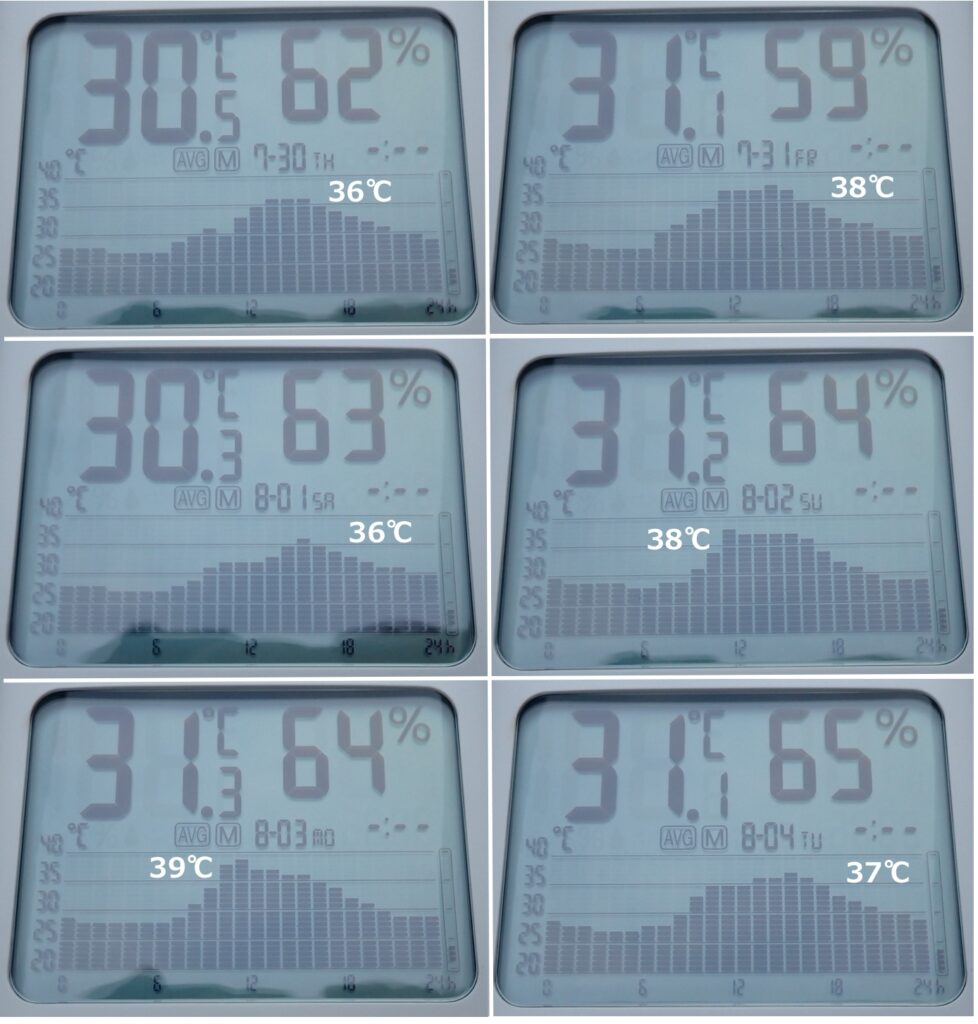
Here are the comparative results recorded by a TANITA digital thermo-hygrometer placed inside the garage, analyzing conditions before and after insulation.
Testing Conditions & Pre-Insulation Baseline
- Pre-Insulation Baseline (Measured early July): Even before the rainy season officially ended, the uninsulated metal garage recorded a peak temperature of 42.0°C (107.6°F).
- Post-Insulation Test Environment (Measured during August heatwave): Peak midsummer conditions with outdoor temperatures consistently exceeding 35°C (95°F) daily.
Temperature Data Before & After Styrofoam Installation
| Measurement Item | Pre-Insulation (Early July) | Post-Insulation (August Heatwave) | Performance Analysis |
| Max Garage Temperature | 42.0°C (107.6°F) | Around 38°C / 100.4°F (Slightly exceeds 35°C on extreme days) | Suppressed by approx. -4.0°C to -6.0°C |
| Relation to Outdoor Temp | Rose +10°C higher than outdoor ambient (Oven condition) | Slightly higher than outdoor ambient | Effectively blocks radiant heat from direct sunlight |
| Indoor Environment Feel | Suffocating oven-like heat | High ambient temp, but no intense radiant heat blast | Light garage maintenance work remains manageable |
Realistic Insights from the Graph Data
Looking at the temperature graph trends, on heatwave days when outdoor ambient temperatures exceed 35°C (95°F), the indoor garage temperature also passes 35°C, hovering around 38°C (100.4°F). Because Styrofoam is passive insulation and not an active air conditioner, indoor air temperature will naturally track extreme outdoor ambient heat over time.
However, the key takeaway is that before insulation, the garage hit 42.0°C (107.6°F) back in early July. Without insulation, temperatures inside a metal garage during an August heatwave would have easily spiked to 45°C–50°C (113°F–122°F).
By installing Styrofoam panels, the intense radiant heat blasting down from the metal roof was completely blocked, successfully capping peak garage temperatures to a manageable level slightly above outdoor ambient (around 38°C / 100.4°F).
Key Benefits of DIY Styrofoam Garage Insulation
After analyzing the real temperature graph, here are the three major advantages of this DIY mod:
- Prevents Extreme Overheating Beyond 45°C–50°C (113°F–122°F)It reliably prevents the garage environment from entering the dangerous ultra-high temperature zone that ruins motorcycle batteries, rubber components, and fluids.
- Low-Cost and Easy Garage DIYUsing budget-friendly Styrofoam boards, a heavy-duty utility knife, and mounting tape from local hardware stores, you save a fortune compared to hiring professional contractors.
- Significantly Improves Perceived Thermal Comfort for MechanicsEliminating the burning sensation of radiant heat radiating from the ceiling makes working inside the garage feel more like standing under shade, making light maintenance much easier.
Recommended DIY Tools for Ultimate Garage Heat Protection
Here are the essential items used for installing, testing, and tracking thermal performance in this project:
1. TANITA Digital Thermo-Hygrometer with Graph Display (TT-580)
A high-performance digital meter that automatically graphs hourly temperature trends over a 1-week period. An indispensable tool for accurately monitoring your garage environment.
2. Kawashima Lumber Styrofoam Insulation Boards (50mm Thick)
High-density insulation panels designed to block fierce overhead radiant heat. The core material for garage thermal DIY projects.
3. Tajima Heavy-Duty Utility Knife (Large Blade)
A heavy-duty cutter optimized for slicing through thick insulation panels cleanly with minimal blade deflection, ensuring precise straight cuts.
Conclusion: Protect Your Bike from Summer Heat with DIY Styrofoam Insulation!
Installing Styrofoam insulation in a metal garage fulfills a crucial role during severe summer heatwaves: it keeps garage temperatures close to outdoor ambient levels (around 38°C / 100.4°F) and prevents indoor heat from spiking into the dangerous late-40°C range.
While the realistic data shows that indoor temperatures can still reach 35°C+ on extreme summer days, this DIY modification successfully prevents critical overheating and extends the operational life of your motorcycle.
For full installation steps, required tools, and cutting techniques, check out my previous guide with full photos!