After the DT200WR, the next bike to come my way was a Honda Transalp 400V. An acquaintance said, "If you want it, it's yours," so I gladly took it.
But when it arrived, the swingarm, chain and rear wheel were covered in rust. I fixed it up bit by bit and rode it from 2010 to 2012.
In this article I look back on restoring a rusty Transalp 400V, what it was like to ride, and why I let it go.
The short version
- I removed the rusty swingarm and repainted it with POR-15
- I laced the rear wheel spokes myself for the first time
- An Africa Twin Öhlins shock made the ride much better
- It was light on its feet and good for long distances, but a tip-over on a slope made me sell it
What is the Transalp 400V?
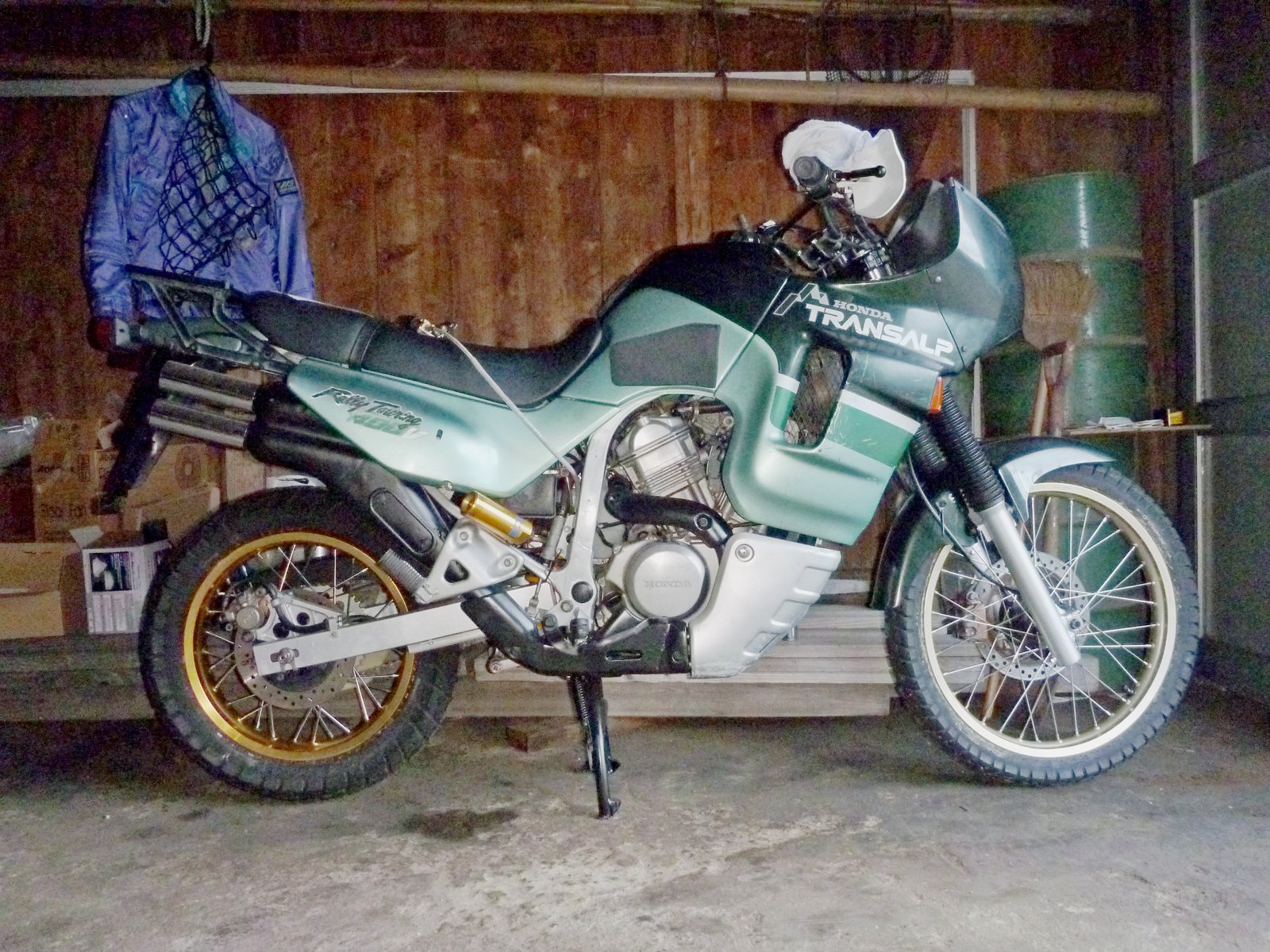
The Transalp 400V went on sale in Japan in October 1991 as a 400cc version of the 600V sold in Europe and elsewhere. It was made so that riders with Japan's mid-size (up to 400cc) licence could ride it (source: Honda news release, 1991).
The engine is a liquid-cooled V-twin. The specifications for the 1994 minor-change model give a vehicle weight of 201 kg and a seat height of 850 mm.
Coming from the DT200WR, I felt that difference in weight a lot.
Covered in rust when I got it
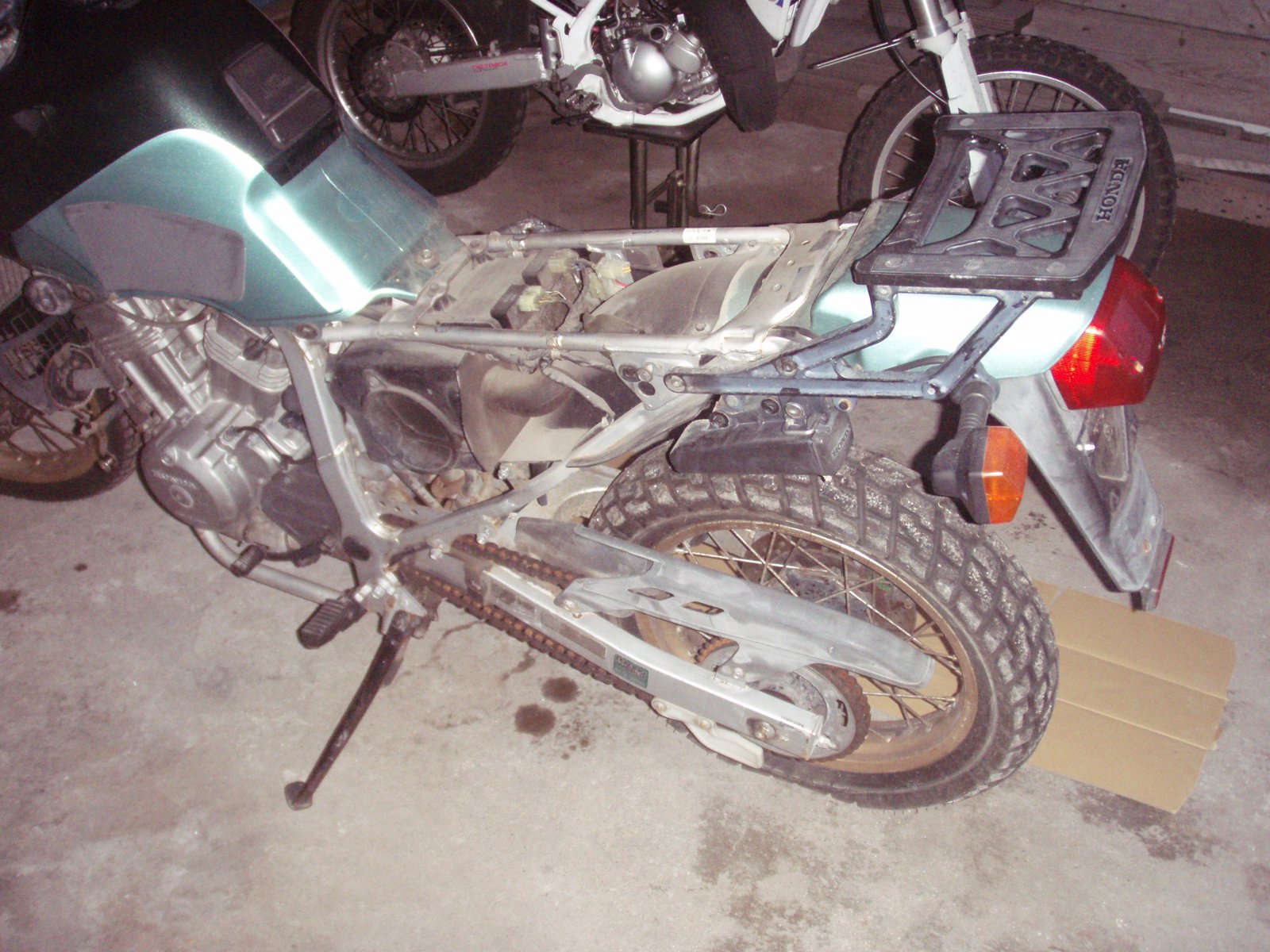
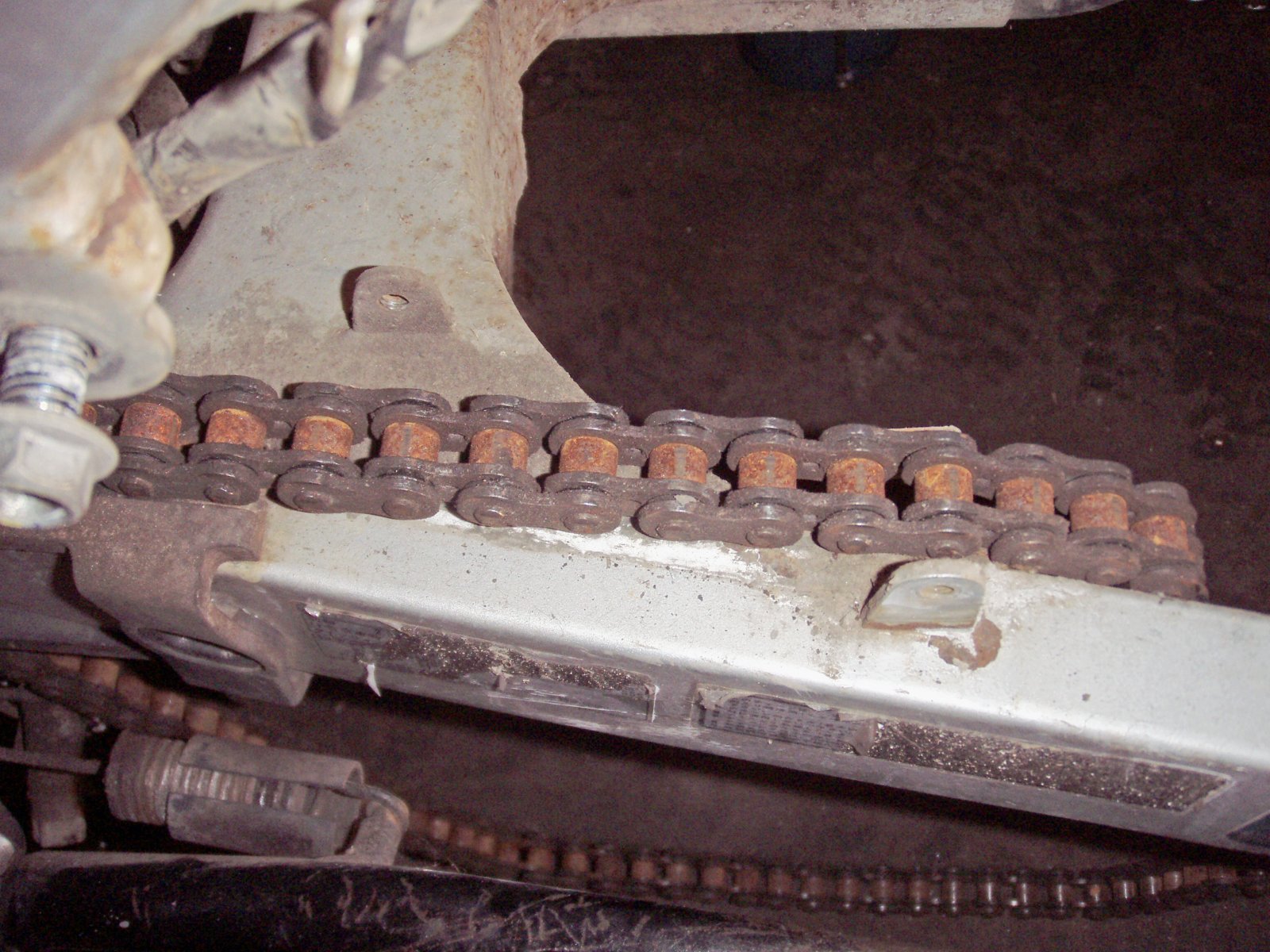
The Transalp I was given had a rusty swingarm, chain and rear wheel. To make it rideable, I worked mainly on the rear end.
New chain and sprockets
The rusty chain was unusable, so I replaced the chain and sprockets with new ones.
Removing the swingarm and painting it to stop rust
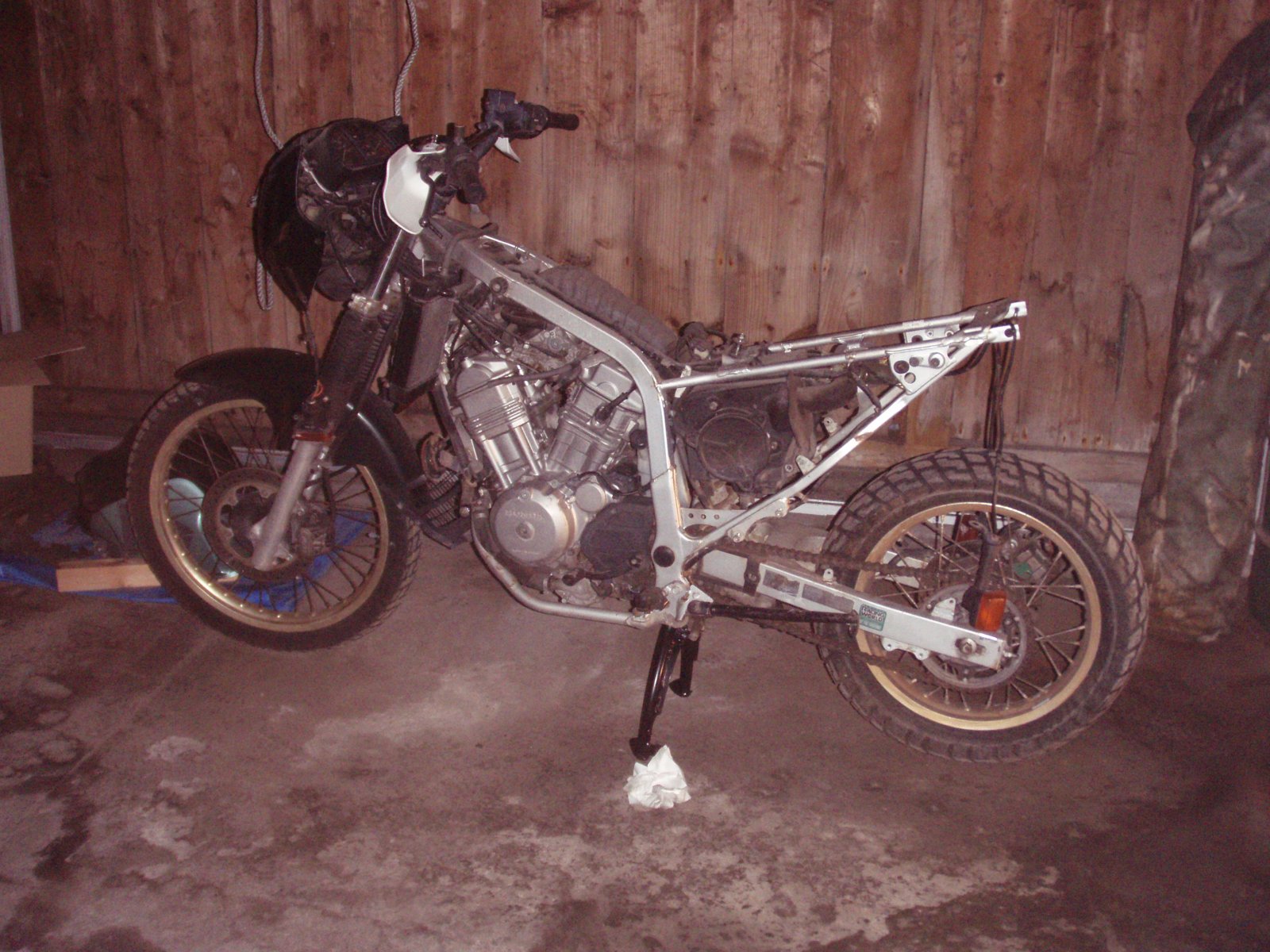
I took the swingarm off the bike and removed the rust. Then I painted it with rust-preventive paint (POR-15).
Buying a centre stand for maintenance
I also bought a centre stand to work on the rear end. Stock was already running low at the time, so I think I was lucky to get one.
My first time lacing spokes
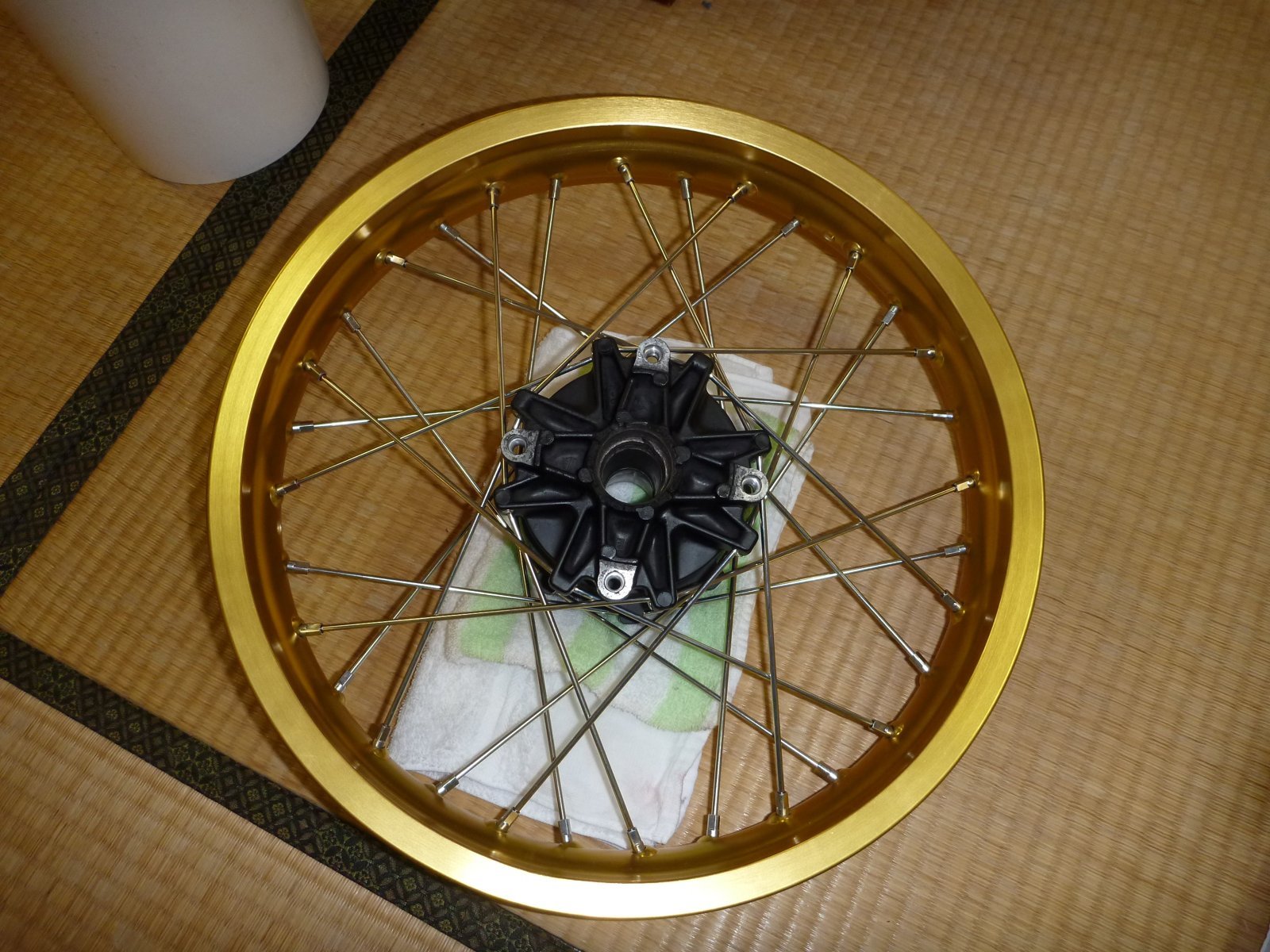
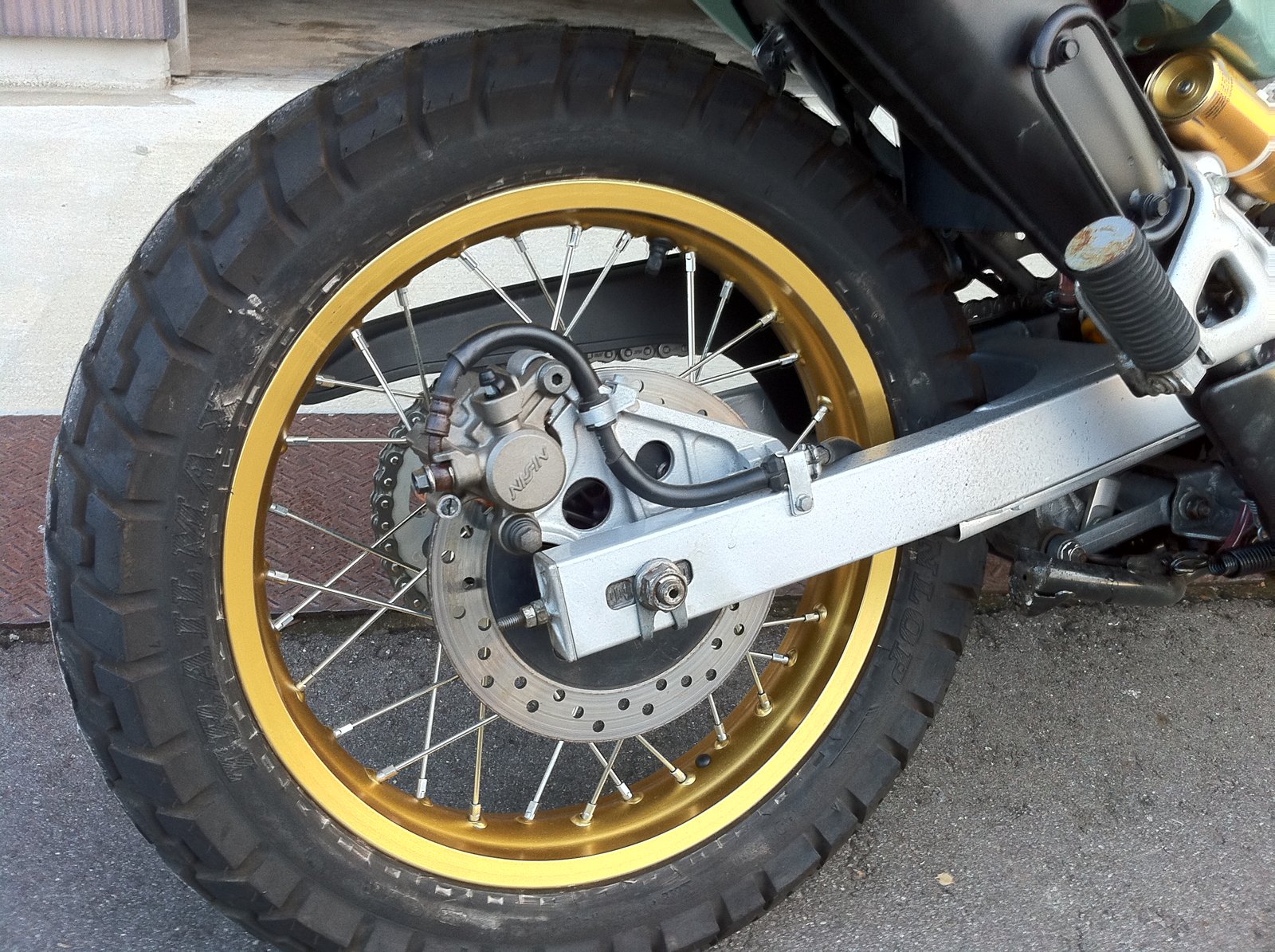
On the rear wheel, the spokes were rusty and the anodising on the rim had worn off.
So I bought new spokes and a new rim and laced the wheel myself for the first time. I think having stripped the DT200WR right down to the engine is what made me think, "I'll give it a go."
Taking apart and cleaning the carburettors
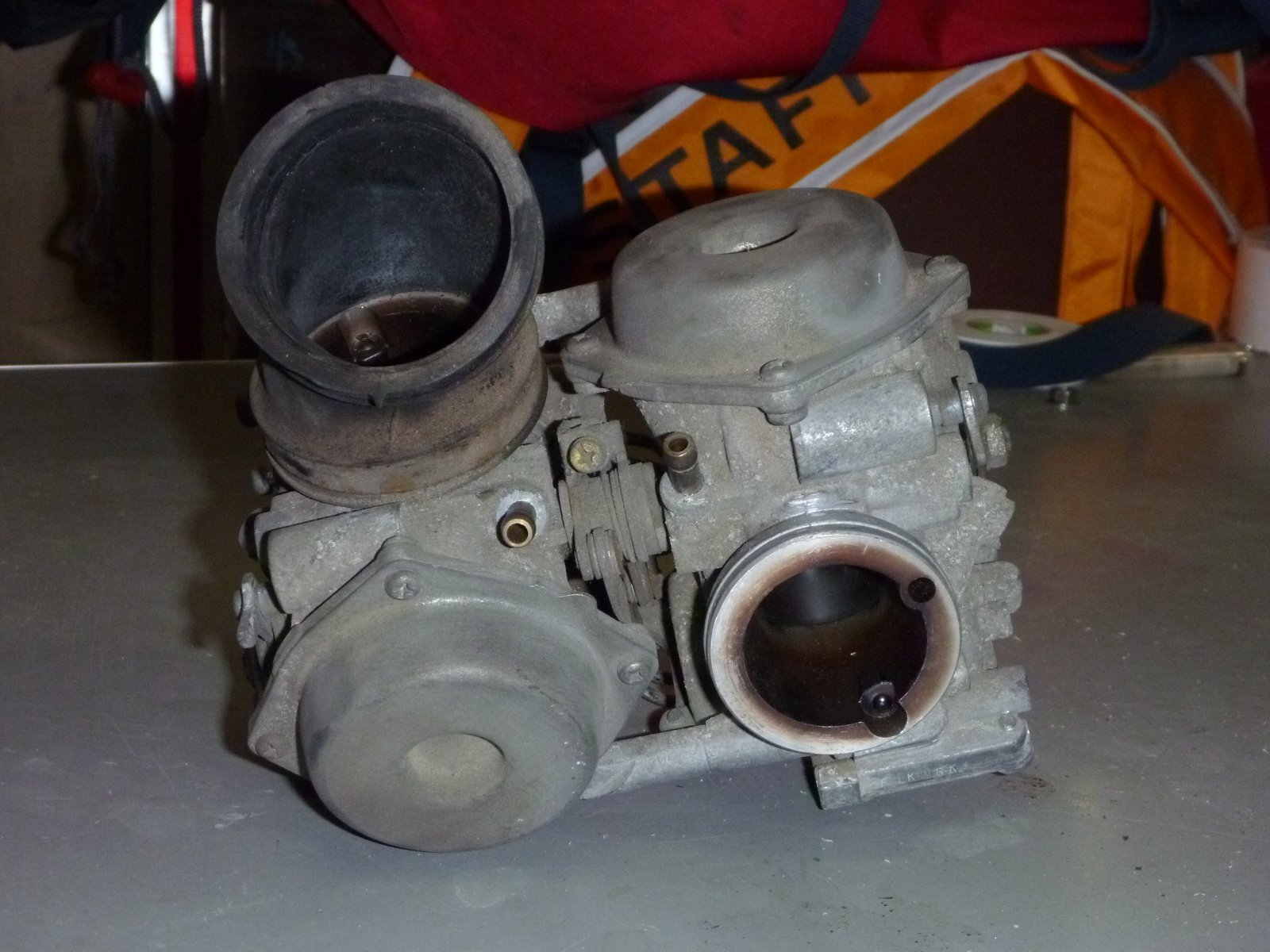
As with the DT200WR, I took the carburettors apart and cleaned them.
Fitting an Africa Twin Öhlins shock
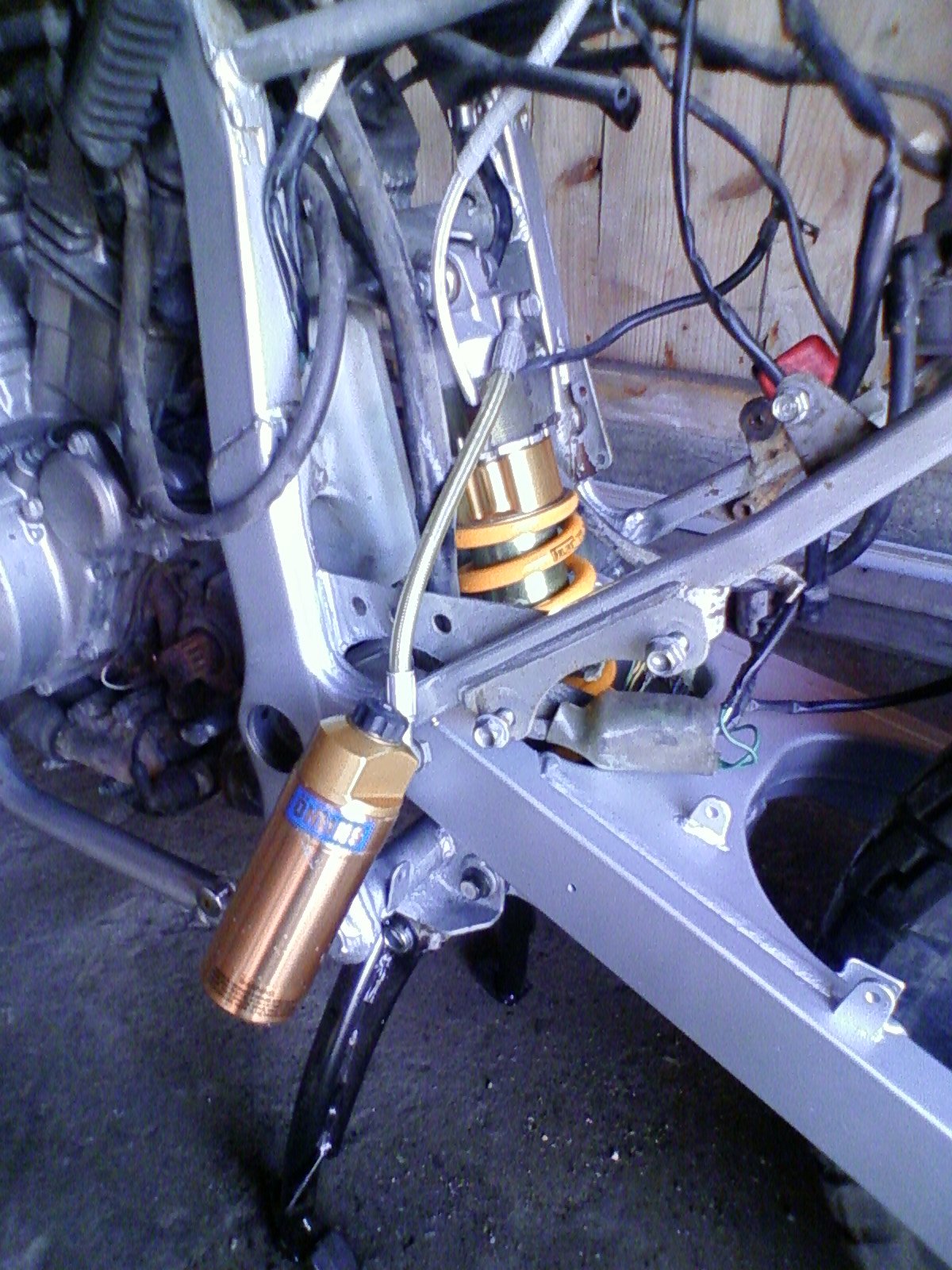
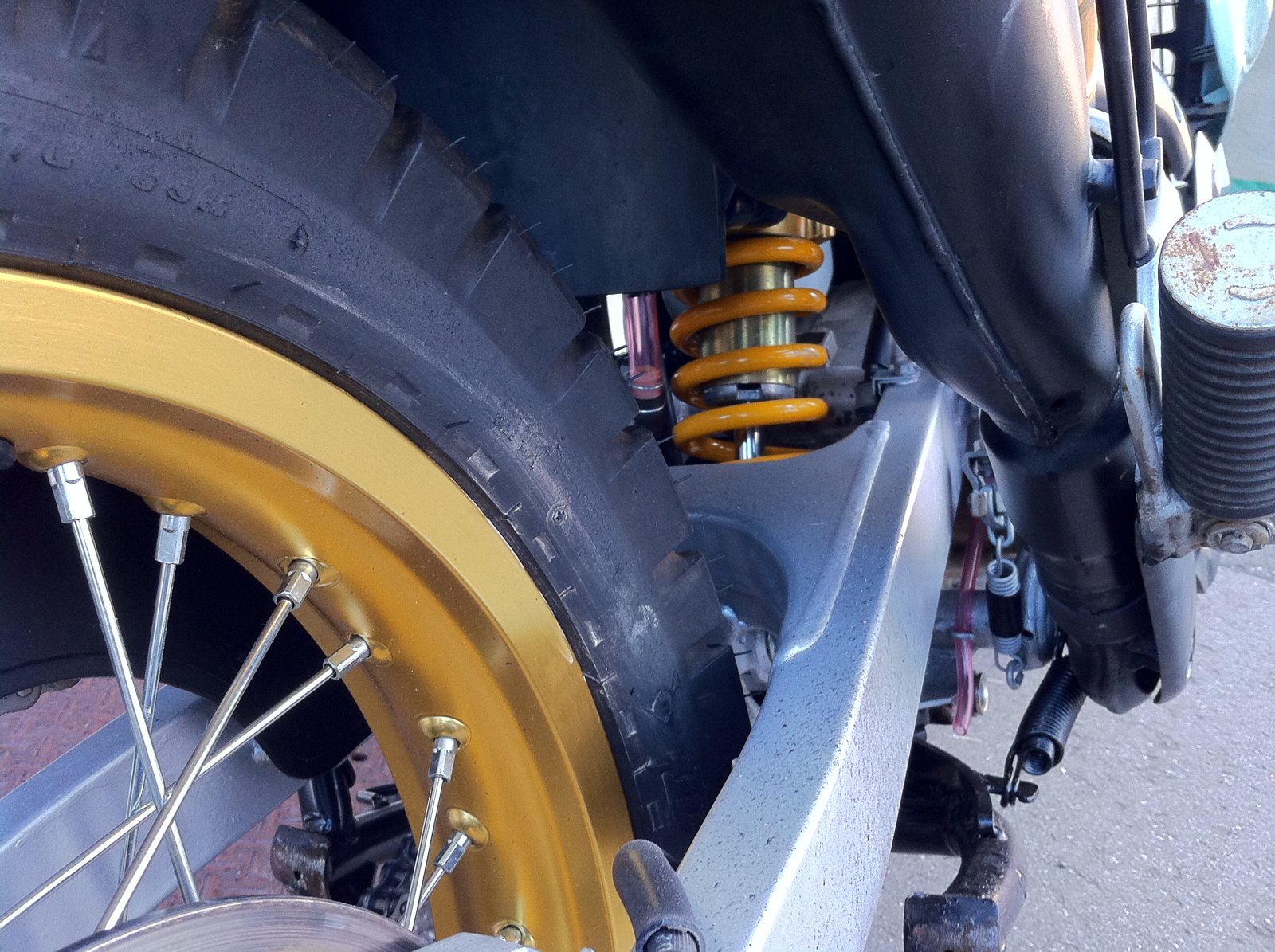
For the rear suspension, I fitted an Öhlins shock made for the Africa Twin of the time. Öhlins didn't sell one for the Transalp 400V then, but the Africa Twin one bolted straight on.
Once it was fitted, what struck me was how completely the ride changed for the better. That experience is why I later went looking for an Öhlins for my G650GS too.
Helped by an owners' forum
Whenever I got stuck on maintenance, the Transalp owners' forum of the time helped me out a lot.
Information from people riding the same bike often wasn't in the manufacturer's documents, and it was very reassuring.
What it was like to ride
When stopped or pushing it around, it felt very heavy, all the more so because I was used to the light DT200WR.
But once moving, it felt light and nimble. The seat was soft and I didn't get tired even on long rides. I thought it was a well-made bike, ideal for long-distance touring.
It was also my first bike that needed a shaken (Japan's periodic roadworthiness inspection). I found the inspections a bit of a hassle.
Selling it after a tip-over on a slope
One day I dropped it while stopped on a slope. The bike fell towards the downhill side, which is the hardest direction to pick it up from.
I had to push the bike up towards the top of the slope to stand it up again, and it was a real struggle.
That put me off a little, and I decided to sell it. Looking back, it was a really well-made bike, and I regret letting it go.
Summary
- I fixed up the rusty rear end myself and rode it
- Lacing spokes and fitting a borrowed Öhlins widened what I could do myself
- It was light on its feet and good for long distances, but a tip-over on a slope made me sell it
After this I got my large-bike licence and moved on to bigger bikes: the TDM900A and then the Tiger Explorer.
*This article is a memory of work I did on my own bike as an amateur (I have no mechanic qualifications). Lacing spokes and working on the suspension and running gear affect your safety on the road. Follow the service manual procedures and specified values, and do any work at your own risk. Fitting parts from other models is outside the manufacturer's specifications.